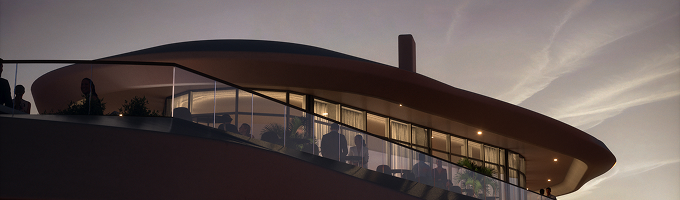
Why Pre-Construction Risk Starts Long Before Construction
Many real estate development problems start before anyone enters the job site.
A project can look solid on paper and still carry serious risk. The site plan may be approved internally. The floor plans may seem logical. The architect may understand the design clearly. But investors, buyers, planning boards, sales teams, and non-technical stakeholders may see something different or fail to see enough.
That gap creates risk.
Pre-construction risk is not only about construction costs, materials, permits, or contractor availability. It is also about misunderstanding. If people do not understand the project early, they hesitate. Investors ask more questions. Buyers delay decisions. Approval teams request more clarification. Internal teams move in different directions. Marketing starts with weak visual assets. Small doubts turn into expensive friction.
This is why many developers now use 3D rendering services much earlier in the development process. The goal is not just to create attractive images. The goal is to reduce uncertainty before it becomes costly.
Professional architectural rendering services help turn technical plans into clear visual assets that investors, buyers, municipal stakeholders, and sales teams can understand. They show scale, materials, atmosphere, building context, spatial flow, and the future value of the project in a way that drawings alone often cannot.
For developers in the U.S. market, this matters even more. Competition is high. Capital is cautious. Buyers compare projects quickly. Planning conversations can move slowly when the visual case is unclear. A strong real estate rendering services partner helps reduce that pressure by making the project easier to understand before construction begins.
The right 3D rendering company does not just produce visuals at the end of the process. It supports development communication from early planning to investor presentations, approvals, pre-sales, and marketing. Good pre-construction visualization helps teams see problems earlier, explain decisions better, and move forward with more confidence.
In that sense, rendering becomes part of the project’s risk-management system.
Why Technical Drawings Often Fail Non-Technical Stakeholders
Technical drawings are essential to real estate development. No serious project can move without plans, sections, elevations, schedules, engineering input, and documentation. These materials define the project.
But they are not always enough to communicate the project.
A developer, architect, and construction team may understand a drawing set clearly. A buyer, investor, lender, city official, or community stakeholder may not. Even when they can read the basics, they may still struggle to understand how the future space will actually feel, how the building will sit in context, or why the project has commercial value.
That is the communication gap architectural visualization services are built to close.
Why Investors and Buyers Struggle With Architectural Plans
Architectural plans require interpretation. They show information, but they do not always create understanding.
An investor may look at a floor plan and understand the unit mix, but still not feel the quality of the finished product. A buyer may see room dimensions, but not understand natural light, ceiling height, flow, view lines, or atmosphere. A planning stakeholder may see an elevation, but not fully understand the building’s relationship with the street, neighboring properties, landscaping, or public space.
This slows decisions.
Investor conversations can stall because the opportunity feels too abstract. Buyers may hesitate because they cannot emotionally connect with a property that does not exist yet. Sales teams may struggle because they are forced to explain too much verbally. And when too much depends on explanation, confidence drops.
Investor-ready renderings help solve this problem. They make the future project easier to evaluate. They show the design in a format that connects technical intent with business value.
Photorealistic rendering services are especially useful here because they reduce the mental effort required from the audience. People do not have to imagine every detail from a drawing. They can see the massing, material direction, lighting, spatial quality, and overall experience. This makes the project feel more concrete and easier to discuss.
For developers, that clarity is not cosmetic. It can affect funding conversations, pre-sales performance, approval confidence, and internal alignment.
How Misunderstandings Create Expensive Project Risk
Misunderstandings are expensive because they often appear late.
A stakeholder may approve a concept early, then react differently once they see a more developed version. A sales team may begin preparing campaign materials before the visual positioning is clear. An investor may question design value after the team has already spent weeks preparing financial materials. A planning board may ask for context or clarification that could have been anticipated earlier.
These issues rarely happen because the team is careless. They happen because different people understand the same project in different ways.
A developer may think in terms of feasibility and margin. An architect may think in terms of design intent. A marketing team may think in terms of buyer perception. An investor may think in terms of risk and future value. If there is no shared visual reference, each group can carry a slightly different version of the project in mind.
That disconnect creates project risk.
Professional 3D rendering services reduce this risk by giving all stakeholders a clearer common reference. A strong architectural rendering company can help show how the project should look, feel, and function before teams commit too far in one direction.
This is important for coordination between architecture, development, sales, and marketing. If the renderings reveal that the entry sequence feels weak, the amenity space lacks visual impact, the facade materials do not support the intended positioning, or the public-facing view does not communicate enough value, the team can address those issues earlier.
Without real estate rendering services, these gaps may only become obvious after approvals, after marketing starts, or after buyers begin asking questions.
By then, revisions are more expensive. Timelines are tighter. And the team has less flexibility.
Why Visualization Improves Decision-Making Before Construction
Good pre-construction visualization improves decision-making because it makes the project easier to evaluate.
It gives developers and stakeholders a clearer view of what they are actually approving. It helps investors understand the commercial story. It helps sales teams see what they will be selling. It helps architects test whether design intent is coming through. It helps planning and approval teams understand context, scale, and public impact.
That does not mean renderings replace technical documentation. They do not. Plans and drawings still carry the technical truth of the project.
But 3D rendering services make that truth easier to communicate.
Photorealistic architectural rendering can show how a lobby feels at eye level, how a multifamily building sits along the street, how amenity spaces support the property’s positioning, or how materials perform under realistic lighting. These details matter because many development decisions are not made by reading drawings alone. They are made by comparing options, evaluating risk, and deciding whether the project feels credible.
This is why rendering should be treated as decision-support infrastructure. It helps teams make better calls before construction begins. It reduces the number of assumptions hidden inside the process. And it gives everyone a stronger basis for discussion.
For developers, that is where the real value starts.
Costly Revisions Before Construction Are One of the Biggest Risks in Development
Revisions are normal in real estate development. Every project changes as design, budget, approvals, market conditions, and stakeholder feedback evolve.
The problem is not revision itself. The problem is discovering major issues too late.
Late changes are expensive because they affect more than design. They can disrupt approvals, delay marketing, change cost assumptions, weaken investor confidence, and create confusion between teams. In some cases, a visual issue that seems small can expose a deeper problem in positioning, layout, material selection, or project communication.
This is one of the strongest reasons developers use architectural rendering services before construction. Rendering helps teams see potential problems while there is still time to fix them with less cost and less disruption.
Why Design Problems Often Appear Too Late
Some design problems are hard to catch in drawings.
A plan may look efficient, but the finished space may feel narrow or poorly connected. A facade may look balanced in elevation, but feel flat or underwhelming in a realistic street view. A material combination may seem appropriate in samples, but look weaker when shown across the full building. An amenity space may meet the program requirements, but fail to create the experience buyers expect.
These are not always technical mistakes. Often, they are perception problems.
And perception matters in development.
A project has to be buildable, but it also has to feel credible to investors, attractive to buyers, acceptable to approval teams, and aligned with the market. If the visual story does not support those goals, the project can lose momentum.
Real estate visualization services help identify these issues earlier. They allow teams to evaluate the project from the viewpoint of the people who will actually judge it: buyers, investors, tenants, lenders, planning boards, and community stakeholders.
Development visualization also helps reveal coordination gaps. The architecture team may be focused on form and function. The marketing team may need stronger lifestyle assets. The developer may need more emphasis on value, density, or market positioning. If those needs are not aligned early, the project can move forward with weak or inconsistent presentation materials.
That is when expensive corrections start.
How Professional Rendering Services Help Detect Problems Earlier
Professional 3D rendering services help developers detect issues that are difficult to see in flat documentation.
Spatial problems are one example. A rendering can show whether a room, lobby, corridor, terrace, or shared amenity area feels proportionate and usable. Even when dimensions are technically correct, the visual experience may not support the intended value of the project.
Lighting is another common issue. Natural and artificial light can change how materials, spaces, and exterior forms are perceived. Poorly lit interiors may feel smaller or less premium. Exterior renderings can reveal whether the building looks strong at street level, during dusk, or in the context of nearby structures.
Facade and material decisions also become clearer through photorealistic rendering services. Developers can see whether glass, stone, brick, metal panels, wood, landscaping, and hardscape elements work together. What looks acceptable in a material board may feel inconsistent or too weak when applied to the full project.
Circulation and entry experience are also easier to evaluate visually. A rendering can show whether the main entrance feels clear, whether pedestrian movement makes sense, and whether the arrival experience supports the project’s positioning.
This is where an experienced architectural rendering company provides more than image production. It helps the client see the project more clearly before decisions become harder to change.
A strong rendering partner does not simply follow files blindly. It understands that images are part of a larger development workflow. The goal is to help the team catch visual, spatial, and communication problems before they affect approvals, marketing, investor materials, or construction coordination.
Why Early Visualization Helps Protect Budgets
Early visualization protects budgets because earlier changes are usually easier and cheaper than late changes.
If a developer discovers a weak material combination during the rendering stage, the team can still adjust the visual direction, review options, and align stakeholders before marketing or approval materials are finalized. If the same issue appears after brochures, ads, investor decks, or approval packages are already prepared, the cost is higher.
The same applies to spatial issues, facade concerns, amenity presentation, lighting direction, and contextual views. The earlier the team sees the problem, the more control it has.
A professional 3D rendering company helps create that control. It gives the development team visual proof before decisions are locked. It helps avoid approval surprises. It reduces late-stage marketing corrections. It gives architecture, development, and sales teams a shared visual standard.
| Problem Found Late | Problem Found During Visualization |
|---|---|
| Expensive redesign | Lower-cost revisions |
| Delayed approvals | Faster alignment |
| Marketing inconsistency | Unified presentation |
| Construction confusion | Better coordination |
This is why pre-construction rendering should not be treated as a final marketing step. It should be part of the decision process.
For developers, the value is simple: see more before spending more.
An architectural visualization company that understands this role can help reduce uncertainty across the project lifecycle. It can support better decisions, stronger communication, and more disciplined presentation before construction begins. That does not eliminate all risk. No rendering service can do that. But it can remove many avoidable risks caused by unclear visuals, weak communication, and late discovery of problems.
Investor Communication Problems Can Slow or Damage Real Estate Projects
Real estate development depends on capital. Even a strong project can lose momentum if investors do not understand it quickly enough.
Financials matter first. Investors will always look at location, market demand, construction costs, projected returns, debt structure, timelines, and risk. But presentation also matters. A project that is hard to visualize often feels harder to trust.
This is where many developers underestimate the role of 3D rendering services. Renderings do not replace financial modeling or due diligence. But they help investors understand what the project is, how it will be positioned, and why the finished asset should have market value.
When the visual story is weak, investor conversations become harder. The team has to explain more. Questions repeat. Meetings slow down. Decision-makers may understand the numbers but still feel uncertain about the product. That uncertainty can delay funding conversations or reduce confidence in the development team.
Investors Need Clarity Before They Commit Capital
Investors evaluate risk both financially and visually. A spreadsheet can show the expected return. A site plan can show the layout. But neither one fully communicates what the asset will become.
For example, a mixed-use project may have a strong location and a logical financial case. But if the investor cannot clearly understand the street presence, residential experience, amenity value, retail visibility, or overall atmosphere, the project may still feel incomplete.
Investor-ready renderings help close that gap. They give investors a more concrete way to evaluate the future asset. They show whether the project feels premium, practical, marketable, and aligned with the target audience.
Architectural rendering services are especially useful when a project involves several layers of value. A multifamily development may depend on lifestyle positioning. A hospitality project may depend on atmosphere. A retail project may depend on visibility and street activation. A master-planned development may depend on context and long-term vision.
A professional real estate rendering company helps translate these layers into visuals that investors can understand faster.
This does not mean making the project look unrealistic or overly polished. Serious investors can usually tell when visuals are exaggerated. The stronger approach is to show the project clearly, accurately, and with the right commercial emphasis.
Good renderings reduce presentation fatigue. They help the team avoid overexplaining the same points. They also make investor materials feel more complete and more prepared.
Why Strong Visualization Improves Project Credibility
Credibility is built through details.
If materials look realistic, the project feels more believable. If lighting is handled well, the space feels more natural. If scale is clear, investors can better understand how people will experience the building. If the surrounding context is accurate, the project feels more connected to its real market.
That is why photorealistic rendering services matter in serious development presentations. They help reduce the gap between concept and asset.
A professional rendering company should understand how credibility is created visually. It is not only about adding dramatic skies, luxury furniture, or people in the scene. It is about showing the project in a way that supports the business case.
For mixed-use projects, that may mean showing how residential, retail, public space, and pedestrian circulation work together. For residential developments, it may mean showing livability, amenities, materials, light, and buyer experience. For hospitality developments, it may mean showing atmosphere, guest flow, arrival experience, and brand positioning. For urban real estate presentations, it may mean showing how the building fits into the surrounding street, density, and neighborhood character.
This level of visual thinking is where 3D rendering services become more than production. They become part of investor communication.
Fortes Vision can be positioned strongly here because the value is not just in producing high-end images. The value is in helping developers present projects with clarity, consistency, and commercial logic. That is what serious investors need before they commit attention, time, and capital.
Rendering Helps Investors Understand Commercial Potential Faster
Investors want to know whether the market will respond to the project.
Renderings help answer that question visually.
They show the lifestyle value of a residential project. They show the atmosphere of a hotel, restaurant, or branded interior. They show the public-facing quality of a mixed-use building. They show how a development will compete against other properties in the same market.
Real estate visualization services help developers move beyond abstract description. Instead of saying the project will feel premium, walkable, welcoming, efficient, or lifestyle-driven, the team can show those qualities directly.
This is important because commercial potential is not only about square footage. It is also about perception. How will buyers feel when they see the lobby? Will tenants understand the value of the amenity package? Will investors see enough differentiation from nearby projects? Does the visual identity match the target price point?
Architectural visualization services help answer these questions before the project reaches the market.
This is why rendering should be treated as commercial storytelling infrastructure. It connects design intent with business value. It helps investors see the future asset more clearly. And it gives developers a stronger tool for explaining why the project deserves capital.
Planning Boards and Approval Teams Need Clear Visual Communication
Pre-construction risk does not only come from investors or buyers. It can also come from approval processes.
Many development projects need to pass through planning boards, design review groups, municipal stakeholders, neighborhood meetings, or internal approval committees. These groups may not evaluate the project the same way a developer does. They may care more about scale, streetscape, public impact, context, traffic, materials, access, or neighborhood fit.
If the project is not explained clearly, questions increase. And more questions often mean more time, more revisions, and more friction.
This is another reason architectural rendering services are important before construction. Good visuals help approval teams understand what is being proposed. They make the project easier to review, discuss, and compare against local expectations.
Why Approval Delays Often Come From Communication Gaps
Approval delays often happen when stakeholders cannot clearly understand how the project will affect its surroundings.
A planning board may question the building’s massing because flat elevations do not show depth well. Municipal stakeholders may worry about street-level experience because the drawings do not communicate pedestrian scale. A neighborhood group may object because the project feels too abstract or disconnected from the area. Review teams may ask for more clarification on materials, landscaping, facade rhythm, access points, or public space.
Sometimes the issue is not the design itself. The issue is how the design is communicated.
Pre-construction visualization helps reduce these gaps. It shows the building in context. It helps stakeholders understand scale, height, massing, materials, and relationship to the street. It can also show how the project interacts with surrounding buildings, sidewalks, greenery, parking, entrances, and public areas.
For developers, this is practical. Clearer visuals can reduce confusion before it becomes delay. They can also help teams prepare stronger responses to concerns.
Urban development visualization is especially useful when a project affects a broader environment. Infill developments, mixed-use buildings, multifamily communities, and hospitality projects often need more than isolated renderings. They need context.
How Rendering Services Help Reduce Approval Friction
3D rendering services can make approval conversations more focused.
Instead of asking stakeholders to imagine the project from technical drawings, the team can show realistic views from relevant perspectives. Eye-level street views can explain pedestrian experience. Aerial views can explain site organization. Context renderings can show how the building fits into the surrounding area. Material-focused views can clarify facade quality and finish direction.
This helps planning boards and municipal stakeholders evaluate the project with fewer assumptions.
A strong architectural visualization company understands that approval visuals are different from marketing visuals. They should be clear, accurate, and useful. They should not hide important context or create a misleading impression. Their job is to support understanding.
Real estate rendering services can also help developers test how a project may be perceived before it is formally reviewed. If a rendering reveals that the building feels too heavy from the street, that the entrance is not clear enough, or that the public space does not feel connected, the team can address the issue earlier.
This reduces friction because the development team enters approval discussions better prepared.
For mixed-use developments and urban projects, this preparation matters. These projects often involve many stakeholder concerns at once: pedestrian flow, street activation, parking, neighboring properties, landscape integration, signage, public access, and overall scale. Rendering helps make those concerns visible and easier to discuss.
Why Context Matters in Large Developments
Context is one of the most important parts of development rendering services.
A building does not exist in isolation. It sits next to other buildings. It affects the street. It changes how people move through the area. It may influence views, traffic flow, pedestrian comfort, public space, and neighborhood character.
If a rendering shows only the building as a polished object, it may miss the questions approval teams care about most.
Architectural visualization services should show how the development belongs in its environment. That includes surrounding architecture, streetscape, landscaping, sidewalks, access points, nearby structures, traffic movement, and public areas when relevant.
For large developments, context also helps internal decision-making. Developers can see whether the project feels too disconnected, too generic, too heavy, or not visible enough from key approaches. They can evaluate how the asset appears from different angles and how it supports the broader development strategy.
This is where professional visualization protects the project before construction. It gives teams a clearer way to test public-facing decisions and reduce avoidable objections.
Pre-Sales Visualization Helps Reduce Market Uncertainty
Developers often need market confidence before the project is finished.
That may mean pre-selling units, attracting tenants, supporting leasing campaigns, building investor confidence, or creating early demand around a future property. But selling something that does not exist yet is difficult.
Buyers and tenants need to trust the promise. They need to understand the quality, atmosphere, layout, finishes, amenities, and lifestyle before they can experience the space physically.
This is where pre-sales renderings become a serious business tool.
Photorealistic rendering services help developers present the future property with enough clarity to support early decisions. They reduce uncertainty by making the project feel more tangible, more understandable, and more credible.
Buyers Need to Trust a Project Before It Exists
A buyer may understand that a new development has a good location. But location alone is not always enough.
They want to know what the building will feel like. They want to see how the lobby looks, how the residence feels, how the amenities support daily life, how natural light works, and whether the overall quality matches the price point.
The same is true for tenants, hospitality operators, retail partners, and brokers. People make decisions based on both logic and perception. If the future experience is unclear, decisions slow down.
Real estate visualization services help create that trust earlier. They allow the buyer or tenant to see the property’s future value before construction is complete. A strong rendering can show atmosphere, scale, materials, view quality, amenity value, and design direction in a way that words cannot.
This does not mean renderings should mislead. Overpromising can damage trust later. The best pre-sales visualization is realistic, polished, and aligned with what the project can actually deliver.
That balance matters. A professional rendering partner should help the project look compelling without making it feel fake.
Why Generic Renderings Often Fail in Competitive Markets
Generic renderings are a problem because buyers compare projects quickly.
A multifamily development, hotel, restaurant, or luxury residential project cannot afford to look like every other property in the market. If the visuals feel flat, stock-like, or emotionally neutral, the project loses part of its commercial edge.
Weak renderings often share the same problems. Lighting looks artificial. Materials do not feel premium. Furniture and people look copied from a library. Exterior scenes lack context. Interiors feel staged but not lived-in. Amenities look technically correct but not desirable.
This weakens positioning.
A strong 3D rendering company should understand that visual differentiation matters. Luxury developments need restraint, detail, and atmosphere. Hospitality projects need a clear guest experience. Multifamily developments need livability and amenity value. Premium residential projects need quality signals that support buyer confidence.
Professional rendering services help communicate those differences. They create images that match the project’s intended audience, pricing, location, and market position.
This is also where an experienced architectural rendering company can guide the visual approach. Sometimes the project needs a warm lifestyle-driven image. Sometimes it needs a clean architectural view. Sometimes it needs a strong dusk exterior for emotional impact. Sometimes it needs accurate material close-ups or a broader context view.
The right visual choice depends on the business goal.
Strong Visualization Supports the Entire Marketing Pipeline
Pre-sales visualization does not end with one hero image.
A real estate rendering company often supports the full marketing pipeline. Renderings may be used across landing pages, brochures, investor decks, paid ads, email campaigns, leasing packages, sales presentations, signage, and broker materials.
Each use case has different requirements.
A landing page may need a strong horizontal hero image that communicates the project quickly. A brochure may need a set of consistent views that show the building, interiors, amenities, and lifestyle. Paid ads may need simpler compositions that work at smaller sizes. Investor decks may need visuals that support commercial logic and project credibility. Leasing campaigns may need images that show daily use, comfort, and practical value.
Architectural visualization services help create a consistent visual system across these materials. That consistency matters because fragmented visuals weaken trust. If the project looks premium in one asset and generic in another, the brand perception becomes unstable.
Strong 3D rendering services help developers avoid that problem. They make the project easier to present across channels and easier for buyers, investors, and sales teams to understand.
For pre-sales, this is the real value. Rendering does not only make the project visible. It helps the market believe in the project before it exists.
Visualization Becomes Even More Important in Phased Developments
Phased developments create a different level of complexity for developers, architects, investors, and marketing teams. The project is not presented once. It evolves over time.
A mixed-use development may launch in several construction stages. A master-planned community may grow over multiple years. A hospitality brand may expand across additional buildings, amenities, or public spaces after the initial phase is complete. During that time, investor materials change, marketing campaigns evolve, approvals continue, and buyer expectations shift.
This creates a major communication challenge.
If the visual language changes too much between phases, the project can lose consistency. Investors may feel uncertain about direction. Buyers may struggle to connect new materials with earlier presentations. Marketing assets may begin to feel fragmented. And internal teams may start working from different assumptions about the project’s identity.
This is why professional 3D rendering services become even more valuable in long-term developments. They help maintain continuity while the project evolves.
Why Large Projects Need Long-Term Visual Consistency
Large developments are rarely static.
Materials may change during value engineering. Public spaces may evolve after feedback from planning boards. Amenity concepts may expand. Marketing positioning may shift as market conditions change. Additional buildings may be introduced in later phases. But even when the project evolves, the overall identity still needs to feel coherent.
That coherence matters because buyers, investors, and stakeholders remember impressions visually.
If Phase One feels premium and highly detailed, but Phase Two looks generic or visually disconnected, trust weakens. If the atmosphere changes dramatically between campaign materials, the project starts to feel unstable. If investor decks, pre-sales visuals, and leasing assets all use different visual standards, the development loses presentation discipline.
This is one reason developers increasingly work with the same architectural visualization company across multiple project phases. Consistency becomes easier to maintain when the rendering team already understands the project logic, material direction, visual positioning, and long-term development strategy.
Professional 3D rendering services support this continuity by creating a stable visual framework. Materials, lighting logic, composition style, landscaping treatment, camera language, and atmosphere remain aligned even as the development grows.
For phased developments, this is not only a branding issue. It is also an operational issue.
Marketing teams need consistent visual assets across campaigns. Sales teams need presentation materials that still feel connected to earlier messaging. Investors need to see that the development remains disciplined over time. Approval stakeholders need to understand how later phases relate to the original project vision.
Development visualization helps maintain that alignment.
Rendering Services Help Maintain Project Cohesion Across Phases
A strong rendering strategy creates continuity across the entire lifecycle of the project.
This includes more than simply matching colors or materials. It includes maintaining a consistent visual logic across all renderings and presentations. Exterior views, interiors, aerials, amenities, pedestrian perspectives, and public spaces should all feel like part of the same development ecosystem.
Architectural rendering services help create that cohesion through structured visual systems.
Camera strategy is one example. A professional 3D rendering company should understand how different views support different goals while still feeling visually connected. Aerials may explain scale and planning. Eye-level views may support emotional connection and pedestrian experience. Amenity visuals may reinforce lifestyle positioning. Investor-focused visuals may emphasize market credibility and long-term value.
Atmosphere continuity is equally important. Lighting direction, environmental mood, landscaping density, seasonal treatment, and population style should feel intentionally connected across the project. Otherwise the development can begin to look inconsistent or artificially assembled from unrelated assets.
This matters especially in phased mixed-use developments, hospitality expansion projects, and master-planned communities where the project may remain in the public eye for years.
Photorealistic rendering services also help maintain scalability. As the project grows, the development team often needs additional visual assets for leasing, approvals, investor updates, sales campaigns, signage, and digital marketing. A rendering partner with a structured workflow can expand the asset library without losing quality or consistency.
That scalability becomes a major advantage over time.
A developer should not need to rebuild the project’s visual identity every time a new phase launches. A reliable architectural visualization company helps maintain continuity while adapting the visuals to new business goals, updated architecture, and changing market conditions.
This is where long-term rendering partnerships become strategically valuable. The rendering team is no longer acting as a disconnected vendor. It becomes part of the project’s communication infrastructure.
Professional Rendering Services Are Becoming Part of Development Infrastructure
The role of rendering in real estate development has changed significantly over the last decade.
Developers no longer use visualization only for final marketing images. Today, 3D rendering services support planning, communication, approvals, investor presentations, pre-sales, leasing, and long-term project positioning before construction is complete.
That shift happened because modern development projects involve more stakeholders, more competition, and higher presentation expectations. Buyers compare properties faster. Investors expect clearer communication. Approval processes demand stronger context. Marketing teams need scalable visual assets long before the building exists physically.
In that environment, weak visualization creates risk.
Professional architectural rendering services help reduce that risk by making the project easier to understand, evaluate, and communicate throughout the development lifecycle. They support alignment between architecture, development, marketing, sales, investors, and public stakeholders.
This is why rendering should now be viewed as part of development infrastructure rather than an isolated design expense.
A professional 3D rendering company helps developers communicate future value before construction begins. It helps investors understand the commercial logic of the project. It helps buyers connect emotionally with spaces that do not exist yet. It helps approval teams evaluate scale, context, and public impact more clearly. And it helps internal teams maintain stronger coordination across evolving project phases.
The strongest real estate rendering services do not focus only on visual polish. They focus on business clarity.
That means understanding how the project will be presented, who the audience is, what concerns need to be addressed, and how the visuals support larger commercial goals. It also means maintaining consistency across investor materials, marketing assets, pre-sales campaigns, approvals, and phased development updates.
This is where experienced rendering partners create long-term value for developers.
A rendering company that understands development workflows, stakeholder communication, investor expectations, and real estate positioning can support the project far beyond image production. It can help reduce avoidable revisions, improve presentation quality, strengthen project credibility, and create more effective communication across the entire lifecycle of the development.
For U.S. developers, that level of support is becoming increasingly important.
The market is more competitive. Buyer expectations are higher. Capital is more selective. And presentation quality now influences how quickly people trust, evaluate, and respond to a project.
Professional 3D rendering services help reduce uncertainty before construction begins. That is why they are becoming part of the operational foundation of modern real estate development rather than simply a marketing add-on.
Your Journey | to Marketing Renders | That Bring Out | The Best in Your | Project
Read Our Whitepaper