How to Choose the Right 3D Rendering Company in 2026
Choosing a 3D rendering company is not just a design decision. It affects how your project is presented, how fast your team can move, and how confidently clients, investors, or buyers understand the final result.
For architects, developers, real estate marketers, and design firms, poor rendering work can create real business problems. A weak image may fail to explain the design. A delayed project can push back a sales campaign. A poorly managed process can lead to endless revisions, extra costs, and missed deadlines.
That is why the right partner matters.
A professional rendering company should do more than create attractive visuals. It should understand drawings, materials, lighting, scale, architectural intent, and the commercial purpose behind each image. The goal is not only to make a project look good. The goal is to help people see the value of a space before it is built.
Good 3D rendering services make complex ideas easier to present. They help teams reduce uncertainty, improve communication, and support better decisions. But not every provider works at the same level.
Some teams are strong in visual style but weak in technical accuracy. Others can produce fast images but struggle with consistency. Some lack the process needed for larger projects with multiple stakeholders.
This guide explains how to choose a 3D rendering company in 2026, what to check before hiring, and which mistakes to avoid before you commit your budget.
Why Choosing the Right 3D Rendering Company Matters More Than Ever
The real estate and architecture markets have become more visual, more competitive, and less forgiving. Buyers, investors, planning teams, and stakeholders now expect clear visual proof before they make decisions. A floor plan or technical drawing is often not enough.
This is especially true in the U.S. market, where developers often need to sell, lease, fund, or approve a project before construction is complete. In that situation, a rendering is not just a presentation asset. It becomes part of the sales process.
A strong architectural rendering company helps translate a future space into something people can understand quickly. It shows volume, atmosphere, materials, light, context, and lifestyle. It can help a buyer imagine a home, an investor understand the project’s potential, or a city planning team evaluate how the building fits into its surroundings.
But this only works when the rendering partner understands both design and business context.
A low-quality render can create the opposite effect. It can make a strong project look generic. It can make premium materials look flat. It can create confusion around scale, layout, or atmosphere. And when the image does not match the intent of the project, the team has to spend more time explaining what the visual failed to communicate.
There is also a cost issue. Marketing budgets are tighter. Paid acquisition is more expensive. Real estate teams need better assets because every campaign, landing page, listing, brochure, and investor deck has to work harder. In that environment, visual quality directly affects trust.
A professional rendering company should reduce risk. It should help your team avoid unclear visuals, inconsistent deliverables, delayed timelines, and avoidable revisions. It should also make the process easier for everyone involved: architects, designers, project managers, developers, brokers, and marketing teams.
In 2026, the best 3D rendering partners are not just image producers. They are visual communication partners. They help you present the project before it exists, and they help your audience understand why it matters.
The Biggest Mistakes Companies Make When Hiring a Rendering Studio
Hiring a rendering studio can feel simple at first. You look at a portfolio, ask for pricing, compare timelines, and choose a vendor. But this is where many teams make expensive mistakes.
The problem is that 3D visualization is not judged only by the final image. The process matters just as much. A studio may show beautiful portfolio pieces, but that does not always mean it can manage your project well. It may not understand your type of building. It may not handle comments clearly. It may not be able to keep quality consistent across several views, units, or phases.
Here are the most common mistakes companies make when choosing a 3D rendering company.
Choosing Based on Price Alone
Price matters. But choosing the cheapest provider often creates more cost later.
A low quote may not include proper modeling, detailed materials, realistic lighting, post-production, or enough revision rounds. It may also mean the team is rushing through the work or using generic assets that do not match your project.
This becomes a problem when the first draft looks weak and the project already has a deadline. Your team may have to pay for extra revisions, restart the work with another studio, or use visuals that do not support the sales or approval process.
The better question is not, “Who is cheapest?” The better question is, “Who can deliver the right quality with the least risk?”
A good 3D rendering company should explain what is included in the quote, what information they need from you, how revisions are handled, and what level of detail you can expect. Transparent pricing is usually a better signal than a low number.
Ignoring Industry Experience
Not every rendering studio is right for every project.
A team that creates good product renders may not understand architectural drawings. A studio focused on interiors may struggle with large exterior scenes, site context, landscaping, or aerial views. A freelancer with strong artistic skills may not have the workflow needed for a real estate development with many stakeholders.
Industry experience matters because each project type has its own logic.
Architectural visualization requires attention to proportion, materials, lighting, and context. Real estate marketing often requires lifestyle, emotion, and buyer-focused presentation. Hospitality projects need atmosphere and brand alignment. Multifamily developments need consistency across amenities, units, exterior views, and marketing assets.
When a rendering partner understands your sector, the process is smoother. They ask better questions. They understand the purpose of the visuals. They know which details matter and which ones can slow the project down without improving the result.
This is one reason many U.S. developers, architects, and design firms prefer working with specialized 3D rendering services instead of general visual vendors.
Reviewing Only Portfolio Highlights
A portfolio is important, but it can be misleading.
Most studios show only their best work. That does not tell you how consistent they are across different project types, timelines, budgets, and deliverables. It also does not show how much direction the client provided, how many revisions were needed, or whether the final result matched the original brief.
When reviewing a portfolio, look deeper.
Check whether the studio has completed projects similar to yours. Look at exterior scenes, interiors, aerial views, amenities, commercial spaces, or residential projects depending on your needs. Pay attention to realism, composition, material accuracy, lighting, and scale.
Also look for consistency. A strong rendering studio should not have one or two impressive images and many average ones. The quality should feel stable.
For larger projects, ask whether the team can keep the same visual style across multiple renderings. This matters for real estate campaigns, investor decks, sales galleries, websites, and brochures. Mixed visual quality can make a project feel less polished.
Overlooking Communication Processes
Many rendering problems start with weak communication.
A studio may have talented artists, but if the process is unclear, the project can still become difficult. Comments get lost. Feedback is misunderstood. Deadlines shift. Different stakeholders send conflicting notes. The final image moves further away from the original goal.
A professional rendering company should have a clear workflow. You should know how the project starts, when drafts are delivered, how comments are collected, how revisions are reviewed, and who manages communication.
This is especially important when several people are involved: architects, designers, developers, marketers, brokers, and owners. Without a clear process, even small decisions can slow down the entire project.
Good communication also protects quality. The studio should confirm camera angles, materials, mood, lighting, furniture, landscaping, and key visual priorities before going too far into production. That reduces the chance of major rework later.
Not Discussing Revision Policies
Revisions are normal in 3D rendering. The issue is not whether revisions happen. The issue is how they are managed.
Some teams start a project without asking how many revision rounds are included, what counts as a revision, and what happens if the scope changes. This can create tension later.
For example, changing a wall color is not the same as changing the building geometry. Adjusting lighting is not the same as redesigning the entire scene. Updating furniture is not the same as replacing the concept.
A reliable 3D rendering company should explain this clearly before the project begins. You need to know what is included, what may cost extra, and how feedback should be submitted.
This protects both sides. The client gets a predictable process. The studio gets clear direction. And the project has a better chance of staying on schedule.
The best rendering partners do not treat revisions as a problem. They treat them as part of the process. But they also manage them with structure, because structure is what keeps the work efficient and the final result strong.
10 Criteria for Evaluating a 3D Rendering Company
The best 3D rendering company for your project is not always the largest one, the cheapest one, or the one with the most polished portfolio. The right choice depends on fit. You need a team that understands your project type, your timeline, your decision-makers, and the commercial role of the visuals.
A good rendering partner should help you move from design information to clear visual communication. That means more than modeling a building or placing furniture in a scene. It means reading the project correctly, asking the right questions, and producing visuals that support real decisions.
Here are the main criteria to check before hiring a 3D rendering company.
Portfolio Quality
Start with the portfolio, but do not stop at first impressions.
A strong portfolio should show more than attractive images. It should show control over light, materials, scale, composition, camera angles, and context. Look at how glass reflects the environment. Check whether wood, stone, metal, concrete, and fabric feel natural. Pay attention to how the scene handles daylight, evening light, landscaping, interior atmosphere, and human scale.
For architectural and real estate projects, realism matters because the image has a business purpose. It may be used in sales materials, investor presentations, planning discussions, property listings, websites, brochures, or ad campaigns. If the render feels artificial, the project can lose credibility.
Also check whether the studio can handle different project types. A professional rendering company should be able to show exterior renderings, interior renderings, aerial views, amenity spaces, residential units, commercial areas, and lifestyle-oriented visuals if those are relevant to your project.
One strong image is not enough. You want stable quality across many examples.
Industry Expertise
A rendering studio may be talented, but still not right for your sector.
Architectural rendering, product rendering, gaming assets, and advertising visuals all require different thinking. For architects, the studio must understand drawings, dimensions, materials, design intent, and construction logic. For developers, it must understand how visuals support sales, leasing, pre-construction marketing, and investor communication. For real estate teams, it must know how to present a property in a way that feels clear, desirable, and believable.
This is where specialized 3D rendering services usually make a difference. A team with real architecture and real estate experience will often notice issues that a generalist vendor may miss. They may ask about site context, facade materials, target buyers, unit mix, amenity priorities, lighting mood, camera strategy, and required marketing formats.
That matters because good renderings are not only about visual style. They are about correct interpretation.
Technical Capabilities
Technical capability affects both quality and workflow.
Before hiring a 3D rendering company, check what types of input files they can work with. Many architecture and development teams use CAD, Revit, SketchUp, Rhino, Archicad, or other design tools. A capable rendering partner should be comfortable working with common architectural formats and should know how to identify missing information before production begins.
You should also understand what the studio can deliver. Some projects only need still images. Others may need animations, 3D floor plans, virtual tours, interactive views, or visual assets for sales galleries and digital campaigns. If your project may grow, it is better to choose a team that can support more than one format.
Technical ability also includes material detailing, lighting setup, post-production, scene optimization, and file management. These details may not be visible in the first call, but they affect the final result.
A weak technical process often shows up later as delays, inconsistent output, or limited revision flexibility.
Turnaround Time
Speed matters, but speed without control is risky.
Many U.S. real estate and architecture teams work under tight deadlines. A sales launch, investor meeting, planning submission, or client presentation may already be scheduled before the visuals are ready. In that situation, the rendering company must give a realistic timeline, not just a fast promise.
Ask how long the first draft will take. Ask how much time is needed for comments, revisions, and final delivery. Also ask what can delay the schedule from the client side. Missing drawings, unclear material references, late design changes, and scattered feedback can all slow the process.
A professional rendering company should be direct about timing. If the timeline is tight, the team should explain what is possible, what may need to be simplified, and which decisions must be approved early.
The goal is not just speed. The goal is predictable delivery.
Revision Workflow
A clear revision workflow is one of the strongest signs of a mature rendering partner.
Most projects need changes. Materials may be updated. Furniture may change. Lighting may need adjustment. A developer may want a stronger marketing angle. An architect may notice a technical detail that needs correction.
The issue is how those changes are handled.
A good 3D rendering company should define revision rounds, feedback format, review stages, and approval points. It should also separate minor visual adjustments from major scope changes. This avoids confusion later.
For example, changing the tone of the lighting is usually a normal revision. Rebuilding the facade after the final draft is a larger change. Replacing a few furniture items is different from redesigning the whole interior concept.
When the revision process is structured, the final result improves faster. When it is not, teams lose time repeating the same comments.
Communication Standards
Good communication reduces risk.
A rendering project often involves several people. An architect may care about design accuracy. A developer may focus on buyer appeal. A marketing team may need campaign-ready visuals. A broker may want a stronger lifestyle feel. If all feedback arrives in different formats, the process can become messy.
That is why communication standards matter.
Before hiring a rendering company, ask who manages the project. Ask how comments are collected. Ask whether feedback should be marked directly on drafts, sent in one document, or discussed in review calls. Ask how conflicts between stakeholders are handled.
A strong team will not rely on guessing. It will confirm the brief, check references, clarify camera angles, and align on priorities before production goes too far.
This is one of the areas where Fortes Vision process can be useful for architects, developers, and real estate teams. The work is not treated as a one-off image request. It is managed as a visual production process, with clear inputs, review stages, and quality checks.
Scalability
A small project may need three images. A full development campaign may need dozens of visuals across multiple phases.
This is why scalability matters.
If you are choosing a 3D rendering company for a larger project, check whether the team can handle volume without losing quality. Can they produce exterior views, interiors, amenity spaces, floor plans, animations, and marketing visuals in one coordinated style? Can they support several deadlines at once? Can they adjust when the project changes?
Scalability is not only about team size. It is about process. A studio with clear production standards can often scale better than a larger team with weak coordination.
For developers and real estate marketing teams, this matters a lot. Mixed visual quality across a campaign can make the project feel inconsistent. The audience may not notice the production issue directly, but they will feel that the presentation is less polished.
Consistency Across Projects
Consistency is often overlooked, but it is critical.
Many studios can create one strong hero image. Fewer can maintain the same quality across a full set of deliverables. This is especially important for multifamily developments, hospitality projects, mixed-use buildings, commercial spaces, and residential communities.
Look for consistency in lighting, color, material treatment, camera logic, styling, and post-production. If one image feels premium and another feels flat, the campaign may lose strength.
A professional rendering company should be able to build a visual language for the project and keep it stable. That includes interior and exterior views. It also includes small details like landscaping, furniture style, people placement when used, sky mood, reflections, and image sharpness.
For U.S. real estate teams, this is not just an aesthetic issue. Consistency supports brand trust. It helps buyers and investors feel that the project is well planned.
Client Reviews
Reviews, testimonials, and case studies help you understand how the studio works when the project is real, not just when the portfolio is edited.
Look for comments about communication, timing, accuracy, flexibility, and final quality. A client saying that the images looked good is useful. But a client saying that the team met deadlines, understood feedback, solved issues, and supported a launch is more valuable.
If possible, ask for examples of similar work. For example, if you need renderings for a multifamily development, ask about comparable residential or mixed-use projects. If you need visuals for luxury interiors, ask for relevant interior work. If you need commercial renderings, check commercial experience.
A good rendering partner should be comfortable showing proof of relevant experience.
Long-Term Partnership Potential
The first project is important, but the bigger question is whether the studio can become a long-term partner.
Many architects, developers, and real estate teams need renderings again and again. New phases, new buildings, new amenities, new listings, new investor materials, and new marketing campaigns all create visual needs.
A long-term rendering partner learns your standards. They understand your review process. They know your preferred style, your typical deliverables, and your internal approval flow. Over time, this saves time and improves output.
This is where working with a specialized 3D rendering company becomes more valuable than hiring a random vendor for each project. You get a team that can support your pipeline, not just complete one image.
For companies that need professional 3D rendering services regularly, this kind of partnership can reduce friction and make visual production more predictable.
Questions to Ask Before Signing a Contract
Before you sign a contract with a rendering company, ask direct questions. A good partner will answer clearly. A weak partner may avoid specifics or give vague promises.
These questions help you understand quality, timing, deliverables, revisions, and team structure before the project starts.
Questions About Quality Control
Ask how the studio checks accuracy before sending drafts. Do they review drawings carefully? Do they check dimensions, materials, furniture, lighting, and context? Who approves the image internally before the client sees it?
This matters because many rendering problems are preventable. A good quality control process catches issues early. It reduces the chance that your team has to point out basic mistakes later.
You can also ask whether the studio has experience with projects similar to yours. If you are developing a residential community, ask about residential and real estate marketing work. If you are preparing investor materials, ask whether they understand presentation-driven visuals.
Questions About Deadlines
Ask for a clear timeline. Not a general estimate. A real project schedule.
You need to know when the first draft will be ready, how long each revision round takes, and when final files can be delivered. You should also ask what information the studio needs from you before production can begin.
A reliable 3D rendering services provider will explain dependencies. For example, they may need drawings, site plans, material references, mood boards, furniture direction, camera preferences, branding requirements, or examples of the desired visual style.
If the studio promises a fast deadline without asking about project details, that is not a good sign.
Questions About Deliverables
Clarify exactly what you will receive.
Ask about image resolution, file formats, number of views, aspect ratios, source files, usage rights, and final delivery structure. If the visuals will be used for print, digital ads, websites, MLS listings, investor decks, or large-format displays, the technical requirements may differ.
You should also ask whether the quote includes only still images or whether it can cover additional assets such as animation, 3D floor plans, virtual tours, or social media formats.
This helps avoid surprises. It also helps the rendering company plan the work correctly from the start.
Questions About Revisions
Ask how many revision rounds are included. Ask what counts as a revision. Ask what happens if the design changes after production begins.
This is important because design projects often change. Materials get updated. Layouts shift. Stakeholders add comments. Marketing teams may request a different mood.
A strong rendering partner will not avoid revisions. But they will define the process clearly. That protects your timeline and budget.
You should also ask how feedback should be submitted. The best approach is usually consolidated feedback from one decision-maker or one organized document. Scattered comments from several people can slow the process and create contradictions.
Questions About Team Structure
Ask who will work on your project.
Will there be a project manager? Who handles communication? Who creates the model? Who works on materials and lighting? Who does post-production? Who checks the final files?
You do not need to manage every person involved, but you should know whether the company has a clear internal structure.
This is especially important for larger projects. A single artist may be enough for a small interior render. A full development campaign may need a more organized team with dedicated roles.
A professional rendering company should make the process feel controlled. You should not have to chase updates, repeat instructions, or wonder who is responsible for the result.
Red Flags That Signal a Poor Rendering Partner
Some warning signs are visible before the project starts. It is better to notice them early than to deal with problems after the deadline is close.
A poor rendering partner can cost more than the invoice amount. The real cost may include missed launch dates, weak marketing assets, confused stakeholders, and extra internal work.
Unrealistically Low Prices
A low price is not always bad. But an unusually low price should raise questions.
Professional rendering work takes time. The team has to study the project, build or clean the model, apply materials, set lighting, choose camera angles, prepare drafts, revise the image, and finish post-production. If the quote is far below the market, something is usually missing.
The studio may use generic assets. It may rush the work. It may limit revisions. It may not include detailed modeling. Or it may charge extra later for items you assumed were included.
For serious architectural and real estate projects, the cheapest option is often not the safest option.
No Process Transparency
If the studio cannot explain its process, be careful.
You should understand how the project starts, what inputs are required, when drafts are delivered, how revisions work, and who manages communication. If the answer is vague, the actual project may also be vague.
A mature 3D rendering company will usually have a clear workflow. It may not be complicated, but it should be understandable.
Lack of transparency often leads to missed expectations. The client assumes one thing. The studio assumes another. And the final image suffers.
Generic Portfolio Examples
A generic portfolio is another warning sign.
If all examples look similar, the studio may rely on templates rather than project-specific thinking. This can be a problem when your project needs a distinct architectural style, brand tone, buyer profile, or location context.
For U.S. real estate and architecture projects, context matters. A luxury condo in Miami, a multifamily project in Texas, a mountain home in Colorado, and a commercial space in New York should not feel the same.
Good rendering services adapt to the project. Poor ones make every project look like the same image with different furniture.
Slow Response Times
Slow communication before the contract often becomes slower after the contract.
If a rendering company takes too long to answer basic questions, misses details, or gives incomplete replies, that may indicate how the project will be managed. Rendering work requires many small decisions. Slow communication can turn a simple project into a stressful one.
This does not mean the studio must answer every message instantly. But it should communicate with structure and reasonable speed.
For deadline-driven projects, this is critical.
Lack of Industry Knowledge
A studio that does not understand your industry will need more direction from you.
This can create extra work for your team. You may have to explain basic architectural terms, correct obvious mistakes, or guide visual decisions that the rendering partner should already understand.
For architects, developers, and real estate teams, industry knowledge is not optional. The studio should understand drawings, materials, scale, site context, buyer expectations, and the purpose of the visuals.
The right rendering partner makes your work easier. The wrong one adds another layer of management.
Comparing Freelancers, Small Studios, and Full-Service Rendering Companies
Not every project needs the same type of rendering partner. A small interior concept, a full real estate launch, and a large architectural competition have different requirements. That is why it helps to understand the difference between freelancers, boutique studios, and full-service rendering companies before you choose a team.
The wrong model can create problems even if the artist is talented. You may get a good image, but struggle with deadlines, communication, revisions, or consistency across a larger set of visuals. The right model depends on project size, risk, quality expectations, and how much management your team can handle.
Freelancers
Freelancers can be a good fit for small, simple, or clearly defined projects. If you need one interior view, one product-style image, or a basic concept render, a skilled freelancer may be enough.
The main advantage is flexibility. You may get direct communication with the artist, a lower price, and a faster start. For a small project with limited scope, this can work well.
But there are limits.
A freelancer usually has less capacity than a rendering studio. If the project expands, the timeline can become difficult. If several views are needed at once, quality may become less consistent. If the freelancer gets sick, becomes unavailable, or has another urgent project, there may be no backup team.
Freelancers can also require more management from the client. You may need to prepare a very clear brief, organize references, control revisions, and check technical details yourself. For architects, that may be manageable. For developers or real estate marketing teams, it can become a time drain.
A freelancer is usually best when the project is small, the timeline is flexible, and the internal team can guide the process closely.
Boutique Studios
Boutique studios are often a strong middle option. They usually have a small team, a defined style, and more structure than a single freelancer. For many architecture and real estate projects, this can be a good fit.
A boutique rendering studio may offer better quality control, more stable communication, and a clearer process. The team may include modelers, visualization artists, post-production specialists, and a project manager. This reduces the risk of the project depending on one person.
Boutique studios can work especially well for premium interiors, private residences, hospitality projects, branded spaces, and smaller development campaigns. They often care deeply about image quality and visual mood.
The possible downside is capacity. Some boutique studios are selective and may not be able to take urgent or high-volume work. Others may have a strong visual style, but less flexibility if your project needs a different look.
Before choosing a boutique studio, check whether their style matches your project. Also ask how they handle multiple views, tight deadlines, and feedback from several stakeholders.
Full-Service Companies
A full-service 3D rendering company is usually the safest choice for larger, more complex, or business-critical projects.
This model works well when you need more than one image. For example, a developer may need exterior renderings, interiors, amenity spaces, aerial views, 3D floor plans, animations, and marketing visuals for the same project. An architecture firm may need a consistent visual package for a competition, client presentation, or approval process.
The main advantage is structure. A full-service team can usually handle more deliverables, clearer project management, and more predictable timelines. There may be separate specialists for modeling, lighting, materials, composition, animation, and post-production.
This matters when the visuals need to support real business decisions. If the images will be used for pre-sales, leasing, investor decks, advertising, or public presentations, the risk is higher. You need quality, but you also need process control.
A full-service company may cost more than a freelancer. But for many U.S. architects, developers, and real estate teams, the value is in reduced risk. The project is less dependent on one person. The workflow is clearer. The output is more consistent.
Here is a simple way to compare the models:
| Partner type | Best for | Main risk |
|---|---|---|
| Freelancer | Small, simple, low-risk visuals | Limited capacity and backup |
| Boutique studio | Premium visuals with moderate scope | Limited scalability |
| Full-service company | Complex, multi-asset projects | Higher initial cost |
There is no universal answer. But if your project has a fixed launch date, several stakeholders, or a high commercial value, choosing a full-service 3D rendering company is usually the safer path.
What High-Performing 3D Rendering Services Look Like in 2026
3D rendering services have changed. A good result is no longer just a polished still image. In 2026, strong rendering work is faster, more collaborative, more flexible, and more connected to the way architecture and real estate teams actually make decisions.
The core standard is still the same: the image must look realistic, accurate, and useful. But the process behind that image now matters more.
High-performing professional rendering services combine creative judgment with technical workflow. They help teams review ideas earlier, reduce revision cycles, and create visual assets that can be used across sales, marketing, approvals, and presentations.
One major change is AI-assisted production. AI can help with references, mood exploration, early visual direction, asset support, and some post-production tasks. But it does not replace architectural understanding. A serious rendering partner still needs human control over design accuracy, materials, geometry, lighting, and final quality.
This distinction matters. Fast AI-generated visuals may look interesting, but they can be inaccurate. For real projects, accuracy is not optional. Walls, windows, proportions, finishes, furniture, site context, and atmosphere have to match the design intent.
Another important shift is real-time collaboration. Clients do not want to wait until the final stage to discover that the angle, mood, or material direction is wrong. Better workflows now include earlier review points, clearer draft stages, and cloud-based feedback. This helps teams comment on images directly, track changes, and keep all stakeholders aligned.
Interactive visualization is also becoming more common. Some projects need more than static renderings. Developers may want virtual tours, animated walkthroughs, or real-time presentations for buyers and investors. Architects may need interactive tools to explain space, movement, layout, or light.
VR and animation are useful when still images are not enough. A still rendering can show mood and composition. Animation can show flow. A virtual tour can show scale and sequence. For large developments, hospitality spaces, sales centers, and high-end real estate, this can make the project easier to understand.
But technology alone does not make rendering services better. The best results still come from a clear process.
A high-performing rendering company should be able to:
- understand architectural drawings and design intent;
- recommend the right visual format for the project;
- define the production timeline early;
- organize comments and revisions;
- keep quality consistent across all deliverables;
- adapt visuals for marketing, sales, or investor use.
This is what separates professional 3D rendering services from simple image production. The goal is not just to create something attractive. The goal is to help the project communicate better.
In 2026, that means a stronger mix of accuracy, visual quality, speed, collaboration, and business understanding.
How Fortes Vision Supports Architects, Developers, and Real Estate Teams
Fortes Vision works as a 3D rendering company for teams that need more than attractive images. The focus is on clear visual communication, stable quality, and a process that fits real architectural and real estate workflows.
For architects, this means careful work with design intent. A rendering should not distort the project or turn it into a generic image. It should respect proportions, materials, light, context, and the logic behind the design. When the visuals are accurate, architects can present ideas more clearly to clients, boards, partners, and internal teams.
For developers, the priority is often different. The rendering has to support business goals. It may need to help sell units before construction, support investor conversations, improve listing materials, or make a project easier to market. In that case, the image must do more than show the building. It has to show value.
For real estate teams, strong visuals can reduce friction. Buyers and tenants often struggle to understand unfinished spaces. Technical drawings do not create enough confidence. A realistic image, animation, or virtual tour can make the future property easier to evaluate.
Fortes Vision process is built around that problem.
The team starts by understanding the project, the available materials, and the purpose of the visuals. That may include drawings, 3D models, mood references, brand direction, material schedules, site context, and marketing goals. The point is to understand what the image needs to achieve before production moves too far.
Then the visual direction is shaped around the project. Camera angles, lighting, composition, mood, and scene details are not random choices. They should support the audience and the use case. A rendering for an investor deck may need a different feel than a lifestyle image for a residential sales campaign.
Quality control is also important. Strong 3D rendering services depend on details: facade materials, reflections, interior finishes, furniture scale, landscaping, lighting temperature, and post-production balance. These details affect whether the final image feels believable.
Fortes Vision also helps when a project needs more than one deliverable. A single render may be enough for a small concept. But many real estate and architecture projects need a coordinated visual package: exterior views, interior scenes, amenity renderings, 3D floor plans, animations, or virtual tours. Keeping those assets consistent is where a structured team becomes valuable.
A simple example: a multifamily development may need hero exterior renderings for the main campaign, interior views for unit marketing, amenity visuals for leasing, and an animation for presentations. If each asset feels different, the campaign looks fragmented. If the visual language is consistent, the project feels more credible.
That is the role of a professional rendering partner. Not just to create images, but to help the project look clear, reliable, and ready for presentation.
Fortes Vision is a good fit for teams that need professional 3D rendering services with a clear workflow, realistic output, and enough flexibility to support architectural, development, and real estate marketing needs.
Final Checklist for Choosing a 3D Rendering Company
After reviewing portfolios, comparing providers, and discussing project requirements, it helps to step back and ask one simple question:
Can this team help move the project forward with less risk?
The best 3D rendering company is not necessarily the one with the most awards, the largest team, or the lowest price. It is the company that can consistently deliver the right quality, communicate clearly, and support your goals throughout the project.
Before making a final decision, use this checklist:
✓ The portfolio includes projects similar to yours.
✓ The company understands your industry and project type.
✓ The team can explain its workflow clearly.
✓ Timelines are realistic and documented.
✓ Revision policies are transparent.
✓ Communication channels are defined.
✓ Deliverables are clearly outlined.
✓ The company has relevant client reviews or case studies.
✓ Quality is consistent across multiple projects.
✓ The team has enough capacity for your timeline and scope.
✓ Technical capabilities match your requirements.
✓ The company can scale if the project expands.
✓ Stakeholders feel comfortable working with the team.
✓ The provider understands the commercial purpose of the visuals.
✓ The proposed solution fits your budget without sacrificing quality.
If several companies meet these requirements, look at long-term fit. A rendering partner that understands your standards, review process, and project goals can save significant time on future work.
For architecture firms, developers, and real estate teams, the strongest partnerships often come from consistency rather than constantly searching for new vendors. A professional rendering company becomes more valuable with each project because it learns how your team works.
That is often the difference between simply buying renderings and building a reliable visual production process.
Ready to Work With a Trusted 3D Rendering Company?
Choosing a 3D rendering company is ultimately about confidence.
You need confidence that the visuals will accurately represent the project. Confidence that deadlines will be met. Confidence that communication will stay clear when multiple stakeholders are involved. And confidence that the final result will support the project’s goals, whether those goals involve sales, approvals, leasing, fundraising, marketing, or client presentations.
The right rendering partner helps reduce uncertainty. Instead of spending time managing avoidable issues, your team can focus on design, development, marketing, and decision-making.
At Fortes Vision, we work with architects, developers, real estate professionals, and design teams that need professional 3D rendering services backed by a structured process and consistent quality. Every project starts with understanding the purpose behind the visuals, not just the visual itself. That approach helps create renderings that are accurate, useful, and aligned with business objectives.
Whether you need architectural renderings, interior visualizations, exterior views, animations, virtual tours, or a complete visual package for a development project, the goal remains the same: help your audience understand the project clearly and confidently.
If you are evaluating rendering partners for an upcoming project, now is a good time to start the conversation. The earlier the visual strategy is aligned with the project goals, the more value the final deliverables can provide.
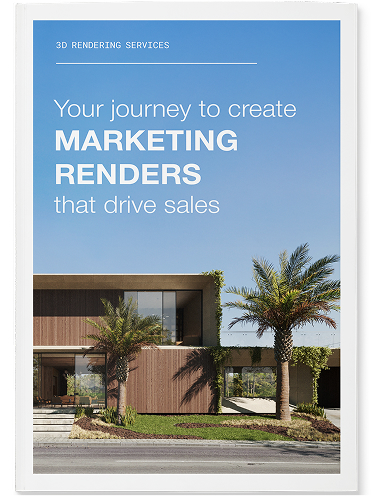
Your Journey | to Marketing Renders | That Bring Out | The Best in Your | Project
Read Our Whitepaper