The real challenge in residential development today
Residential development has changed. Buyers expect clarity early. Investors want to see the outcome before money is committed. And teams can’t afford expensive revisions late in the process.
But most residential projects still rely on floor plans, elevations, and technical drawings to explain the vision. That works for professionals. It doesn’t work for decision-makers.
A plan shows dimensions. It doesn’t show how a house feels.
A section drawing explains structure. It doesn’t help someone imagine living there.
As a result, several problems appear fast:
- Pre-sales are slow because buyers can’t picture the final home
- Investors hesitate because the project feels abstract
- Marketing teams guess instead of communicating clearly
- Design changes happen late, when they’re the most expensive
In residential development, most decisions are visual. When people can’t clearly see the end result, they delay decisions or ask for changes. And every late change increases cost and risk.
That’s the gap 3D house rendering fills.
What is 3D house rendering in residential development?
In residential development, 3D house rendering is a visual representation of a future home created before construction begins. It shows how the house will look, not just how it is planned.
This is not about decoration or “pretty pictures.”
It’s a working tool used to explain, align, and sell a residential project.
A proper house rendering typically includes:
- Exterior views that show massing, materials, and surroundings
- Interior views that explain layout, light, and finishes
- Realistic lighting to reflect time of day and mood
- Context such as landscaping, neighboring buildings, or streets
Unlike conceptual sketches, rendering is tied to real dimensions, approved layouts, and actual materials. It reflects the project as it will be built, not a loose design idea.
In practice, 3D house rendering supports multiple stages of a residential project:
- early alignment between architects, developers, and stakeholders
- pre-construction sales and investor communication
- marketing and listing preparation
That’s why developers don’t treat it as a design extra. It’s part of the development workflow.
For projects that move toward sales and approvals, this work is usually handled through professional 3D House Rendering Services rather than internal drafts or generic visuals.
Where 3D house rendering is used in residential projects
3D house rendering becomes most valuable when clarity matters more than explanation. In residential development, that happens in a few critical areas.
Pre-construction sales and investor presentations
Selling or financing a house that doesn’t exist yet is difficult. Buyers and investors need confidence, not assumptions.
Renderings allow them to:
- understand the scale and proportions of the home
- see exterior style, materials, and surroundings
- visualize interior space, light, and flow
At this stage, developers usually work with a 3d rendering company that understands residential workflows, zoning constraints, and buyer psychology. The goal isn’t just realism. It’s trust.
Clear visuals reduce questions, shorten sales cycles, and help investors commit earlier.
Marketing and listing platforms
Residential listings compete visually. Whether it’s a project website, MLS platform, or sales brochure, visuals often determine whether someone engages or scrolls past.
3D house renderings are commonly used for:
- project websites and landing pages
- brochures and sales decks
- online listings before construction is complete
They allow marketing teams to present a finished vision instead of placeholders or technical drawings. This is where well-executed 3D rendering services directly support conversion and lead quality.
Planning approvals and internal alignment
Renderings also help internally. Planning boards, city officials, and non-technical stakeholders often struggle with drawings alone.
Clear visuals make it easier to:
- explain massing and scale
- show how the house fits its surroundings
- align teams before approvals
This reduces misunderstandings early, when changes are still manageable.
Why 3D house rendering reduces risk in residential development
Residential development carries risk by default. Most of it comes from unclear expectations and late decisions. 3D house rendering helps reduce both.
The biggest issue developers face is change. When buyers, investors, or internal teams don’t fully understand the project early, feedback arrives late. And late changes are expensive.
With clear visuals in place, several things improve.
First, there are fewer late-stage design changes.
When everyone sees the same final outcome early, questions surface sooner. Materials, proportions, and layout decisions are made before construction starts, not during it.
Second, expectations are clearer for buyers and stakeholders.
A rendering sets a shared reference point. Buyers know what they’re paying for. Investors know what they’re backing. There’s less room for interpretation.
Third, approvals and communication move faster.
Planning boards and non-technical stakeholders respond better to visuals than drawings. Renderings make intent clear and reduce back-and-forth.
None of this removes risk completely. But it shifts decisions to earlier stages, where adjustments are cheaper and easier to manage.
Exterior vs interior house rendering: what residential developers actually need
Not every residential project needs everything at once. Knowing what to render, and when, matters.
Exterior house rendering is usually enough when:
- the focus is curb appeal and overall massing
- the goal is pre-sales or listings
- the layout is standard or already familiar to buyers
Exterior visuals help people understand style, scale, and surroundings. For many residential developments, that’s the first priority.
Interior house rendering becomes important when:
- layouts are complex or non-standard
- finishes and materials affect value perception
- buyers are choosing between similar units
Interior views explain how spaces connect, how light behaves, and how rooms function. They reduce uncertainty, especially in higher-end or custom residential projects.
A common mistake is ordering both without a clear purpose. Another is choosing interior views too early, before layouts are stable. The right choice depends on the sales stage, budget, and decision-making needs, not on trends.
What affects the quality of 3D house rendering
Quality in 3D house rendering is not just visual sharpness. It’s how well the images communicate the project’s intent.
Several factors matter most.
Input data comes first.
Accurate drawings, clear dimensions, and real references lead to predictable results. Weak input creates guesswork, no matter how skilled the team is.
Next is the balance between realism and purpose.
Some projects need strict accuracy. Others need a marketing-focused presentation. Quality means knowing which one matters more and adjusting the visuals accordingly.
Understanding residential scale is also critical.
Houses are intimate spaces. Small mistakes in proportions, furniture scale, or camera angles break realism fast. Residential work requires a different eye than large commercial projects.
Finally, experience with similar projects matters.
Teams that regularly work on residential developments understand buyer expectations, approval workflows, and sales timelines.
That’s why professional 3d rendering services focus not only on visual quality, but on how images support sales, approvals, and investor communication.
How 3D house rendering supports residential sales and marketing
In residential development, marketing works only when people understand what they’re buying. That’s where 3D house rendering does most of its work.
For listings, renderings replace uncertainty with clarity.
They show the finished home instead of an empty lot or early construction photos. This helps buyers engage sooner and ask better questions.
In brochures and sales decks, renderings explain value faster than text.
A single exterior image can communicate scale, style, and quality without a long explanation. Interior views help buyers imagine daily life, not just square footage.
On websites, renderings set expectations.
They anchor the entire project narrative. Floor plans explain layout. Renderings explain experience. Together, they reduce bounce and improve lead quality.
For ads and presentations, visuals do the heavy lifting.
Short attention ps mean less time to explain. A clear image often does the job in seconds.
In all these cases, rendering is not decoration. It’s a sales support tool. It helps marketing teams speak clearly and consistently across every channel.
When to order 3D house rendering during a residential project
Timing matters. Ordering rendering too early or too late creates friction instead of value.
At the early concept stage, rendering helps align direction.
It’s useful when the goal is to test massing, style, or layout options. At this point, visuals should stay flexible and decision-focused.
Before pre-sales, rendering becomes critical.
This is when buyers and investors need confidence. Exterior views usually come first, followed by selected interior spaces. The goal is clarity, not completeness.
Before the final marketing launch, rendering supports conversion.
Here, visuals need to be polished and consistent. They should match approved layouts and materials and be ready for listings, brochures, and ads.
The common mistake is waiting too long.
When rendering is ordered after marketing has already started, teams lose momentum and spend more fixing communication gaps instead of preventing them.
Choosing the right approach to 3D house rendering
Not all residential projects need the same approach. The right setup depends on scale, sales goals, and how early visuals are used.
Projects that rely on pre-sales or investor funding usually need a structured workflow. That means clear inputs, defined deliverables, and visuals built around decision-making, not guesswork.
Developers looking for consistent results usually choose specialized 3D House Rendering Services tailored specifically for residential development projects. These services focus on accuracy, buyer perception, and timing, not just visual polish.
The goal is simple.
Use rendering to reduce uncertainty, not create it.
Why 3D House Rendering Has Become a Standard in Residential Development
In residential development, clarity is no longer optional. Buyers expect to understand what they’re buying. Investors expect to see what they’re funding. And teams need fewer assumptions, not more.
3D house rendering is not about design trends.
It’s a risk management tool.
It helps developers make decisions earlier, when changes are cheaper.
It aligns expectations before money is committed.
And it turns abstract plans into something people can actually evaluate.
For residential projects competing in the U.S. market, relying on drawings alone is no longer enough. Visual clarity shortens sales cycles, improves communication, and reduces costly revisions.
That’s why 3D house rendering has moved from “nice to have” to a standard part of modern residential.
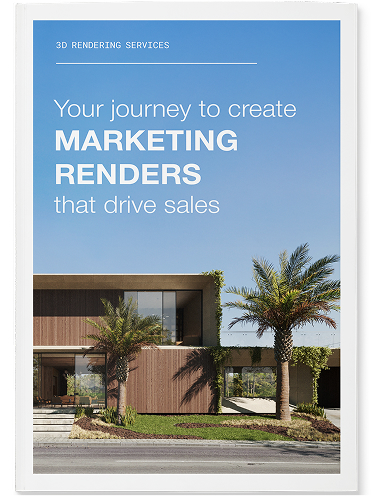
Your Journey | to Marketing Renders | That Bring Out | The Best in Your | Project
Read Our Whitepaper