If you sell, lease, or entitle a property, you’ve seen this before. The design is solid. The numbers work. But the deal slows down because the people who need to approve or buy the project can’t clearly picture it.
Plans, elevations, and CAD files are precise. They are also hard to read if you don’t work with them every day. Buyers, investors, brokers, and planning boards don’t think in drawings. They think about outcomes. Exterior rendering bridges that gap by showing the project as it will actually be seen and judged.
This article explains how exterior rendering supports property sales and helps move approvals forward, especially in early and mid-stage development.
The real problem: why exterior designs don’t sell on paper
Most exterior design packages are created for internal coordination, not for decision-making. That’s where problems start.
From a buyer’s or reviewer’s perspective, drawings raise more questions than they answer. The scale feels abstract. Materials are hard to imagine. The relationship between the building and its surroundings is unclear. As a result, stakeholders rely on assumptions instead of facts.
That leads to predictable issues:
- Buyers hesitate because they can’t visualize curb appeal or street presence.
- Investors struggle to assess market positioning without realistic context.
- Planning boards focus on perceived risks instead of the actual design intent.
None of this means the design is wrong. It means the format is wrong for the audience.
Exterior rendering changes the conversation. Instead of asking stakeholders to interpret technical documents, it gives them a clear, shared visual reference. That reduces misalignment early, when changes are still manageable and decisions matter most.
In practice, teams that combine drawings with professional rendering as part of their overall service stack tend to move faster. This is why many developers treat exterior visuals as a core component of their broader 3d rendering services, not as an optional add-on.
What exterior rendering is and what it actually solves
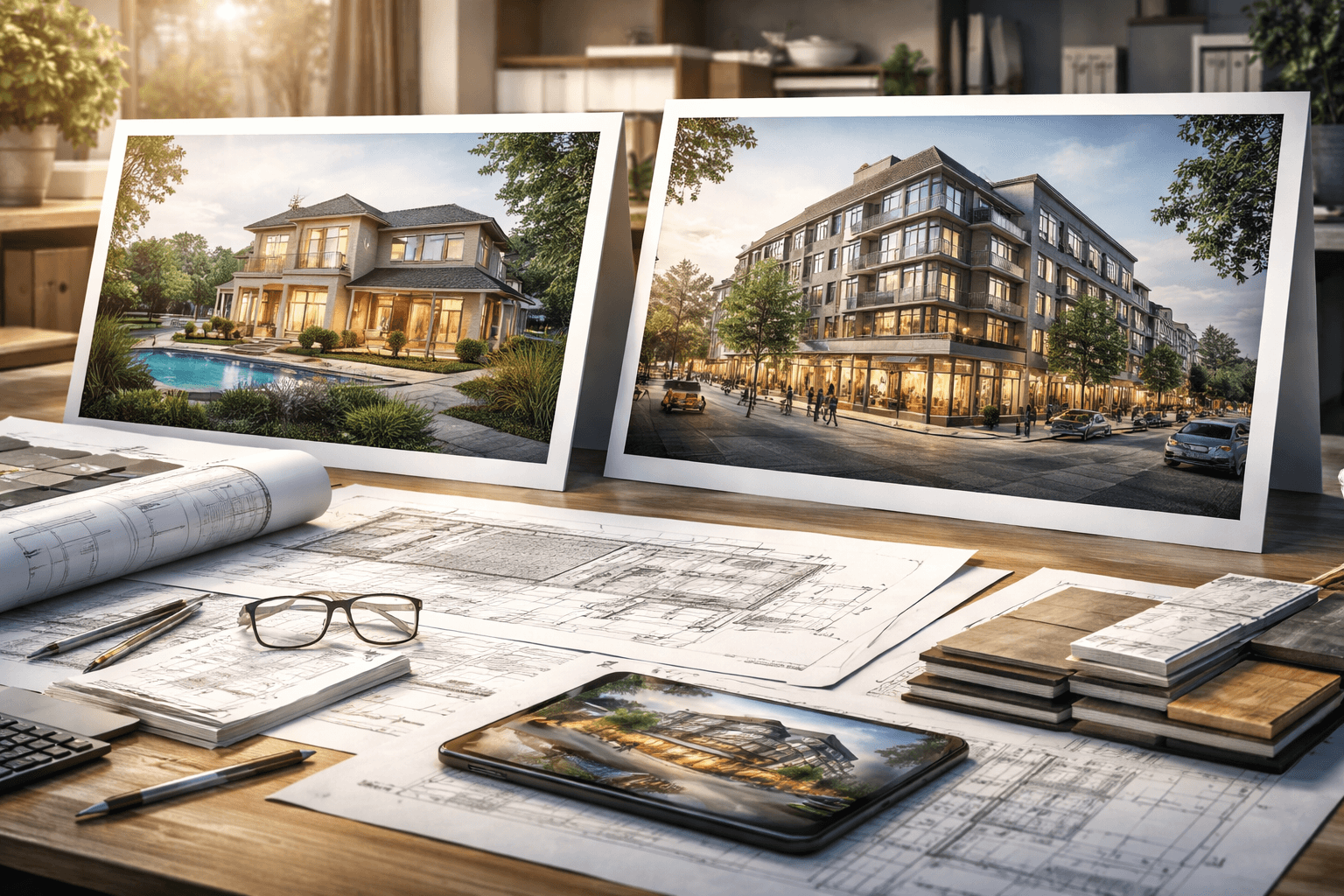
Exterior rendering is the process of creating realistic visual representations of a building’s exterior based on architectural documentation. These visuals show the building in context, with accurate proportions, materials, lighting, and surroundings.
But the real value isn’t realism for its own sake. It’s decision support.
Visual clarity for non-technical stakeholders
Exterior renders translate technical intent into something instantly understandable. They help stakeholders grasp:
- how the building reads from the street
- how massing and height relate to neighboring structures
- how materials and finishes will appear in real conditions
- how the project fits into its site and environment
This clarity reduces the back-and-forth that slows projects down. Instead of vague feedback like “it feels too heavy” or “I’m not sure how this fits,” discussions become specific and actionable.
One shared vision for all decision-makers
A major advantage of exterior rendering is alignment.
When sales teams, investors, designers, and approval authorities are reacting to the same visual material, expectations stabilize. Fewer assumptions are made. Fewer late-stage corrections are needed.
That’s why exterior visuals focused on sales and approvals are typically developed as part of dedicated 3D Exterior Rendering Services, rather than generic marketing imagery. The goal isn’t decoration. It’s clarity that holds up under scrutiny.
How exterior rendering impacts property sales
Exterior rendering improves sales performance by reducing uncertainty at the moment buyers and investors make decisions.
Faster buyer decisions
Buyers move faster when they understand the product without explanation. A clear exterior render lets them evaluate the property visually, the same way they would an existing building. That shortens the sales cycle, especially in pre-construction scenarios.
Stronger first impression in marketing
In the U.S. market, most property discovery happens online. Listings, pitch decks, and offering memorandums compete for attention. Exterior renders give those assets credibility. They show that the project is defined, thought through, and ready to be taken seriously.
This is especially important when multiple projects are competing for the same buyers or tenants. Visual clarity becomes a differentiator.
Pre-sales before construction
Pre-sales depend on trust. Buyers need to believe the final result will match the promise.
High-quality exterior rendering helps establish that trust early. It shows not just what is planned, but how it will realistically look and feel in its context. That’s why many developers engage a reliable 3d rendering company at the beginning of the sales process, rather than waiting until marketing materials are already overdue.
When exterior visuals are aligned with the overall rendering strategy of the project, they support both sales and downstream approvals without rework.
How exterior rendering helps get planning and permit approvals
Exterior rendering plays a different role in approvals than it does in sales. Reviewers are not evaluating aesthetics. They are evaluating risk, impact, and compliance. When visuals are unclear, the safest response is delay.
Exterior renders reduce that risk by showing intent in a way drawings often can’t.
Clear communication with planning boards
Planning boards review dozens of projects. Most delays happen not because a project violates rules, but because reviewers are unsure how it will actually look in context.
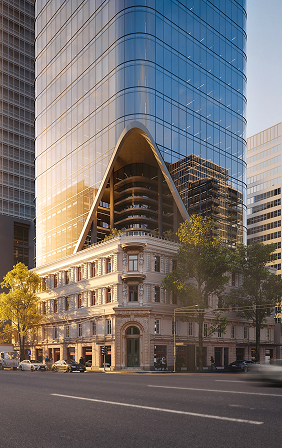
Exterior rendering gives them a street-level understanding of:
- building mass and perceived height
- relationship to adjacent properties
- frontage, setbacks, and transitions
This helps reviewers evaluate the project faster, without relying on assumptions.
Fewer revisions and clarification requests
Many revision requests come from uncertainty, not design flaws. When reviewers cannot visualize the outcome, they ask for changes “just to be safe”.
Clear exterior visuals answer common questions upfront. That reduces clarification cycles and keeps feedback focused on real issues instead of guesswork.
Visual proof of compliance
Exterior renders help demonstrate how a project aligns with zoning intent and neighborhood character. When height limits, step-backs, or contextual fit are sensitive, visuals provide proof that written explanations alone often fail to deliver.
That’s why approval-focused visuals are usually developed as part of dedicated 3D Exterior Rendering Services, where accuracy and context matter more than marketing polish.
Exterior rendering for different property types
Exterior rendering supports different decisions depending on the property type. The mistake is treating all renders the same.
Residential developments
For residential projects, the exterior defines first impression and buyer confidence. People want to understand how the building will feel from the street and how it fits the neighborhood.
Exterior renders help buyers visualize daily experience, not just design intent. They also help planning boards assess scale and transitions without digging through technical drawings.
Commercial and mixed-use projects
Commercial and mixed-use developments are more complex. Multiple stakeholders evaluate different risks at the same time.
Exterior rendering helps align:
- leasing and development teams
- investors and lenders
- city reviewers and community stakeholders
Clear visuals reduce misalignment early, when changes are still manageable.
Hospitality and retail properties
For hospitality and retail, the exterior is part of the brand promise. Investors care about visibility, entry experience, and how the building reads in real conditions.
Exterior rendering helps validate that promise before capital is committed. In larger projects, teams often combine exterior renders with spatial tools like 3D virtual tours to communicate scale and flow more clearly during early reviews.
Exterior rendering vs traditional design materials
Exterior rendering does not replace architectural documentation. It solves a different problem.
Blueprints and elevations
Plans and elevations are precise and essential for construction. But they require interpretation. Non-technical stakeholders often struggle to translate drawings into real-world impact.
That gap slows decisions.
Physical models
Physical models can help explain massing, but they are slow to update and limited in realism. They also struggle to show lighting, materials, and environmental context accurately.
Exterior 3D rendering
Exterior rendering combines accuracy with clarity. It keeps proportions and intent intact while making the project readable for buyers, investors, and reviewers.
This is why rendering is most effective when treated as part of a broader 3d rendering services workflow, not as a last-minute visual add-on. It supports understanding where understanding matters most.
When exterior rendering becomes a business advantage
Exterior rendering starts to matter most when decisions carry real cost. Not aesthetic cost. Business cost.
This usually happens when projects move from internal alignment to external commitment. At that point, clarity saves time, money, and friction.
Early-stage investor presentations
Investors don’t fund drawings. They fund outcomes.
Exterior rendering helps investors understand scale, positioning, and site context without a technical walkthrough. It reduces perceived risk and shortens evaluation time. Instead of debating what the building might look like, the conversation shifts to feasibility and return.
This is especially important when multiple projects compete for the same capital.
Marketing and sales launch
Once marketing starts, exterior visuals define expectations.
They anchor pricing discussions, support pre-sales, and give brokers confidence in how they present the project. When buyers can clearly see what they are committing to, hesitation drops and conversations move forward faster.
At this stage, rendering stops being a design deliverable and becomes a sales asset.
Planning and approval submissions
Under review pressure, exterior rendering works as a coordination tool.
Clear visuals help reviewers evaluate impact without guessing. That reduces conservative pushback and avoids changes driven by misunderstanding rather than regulation.
This is where professional 3D Exterior Rendering Services become a strategic investment rather than a design expense, because they are built to support real decisions, not just presentation.
What to look for in exterior rendering services
Not all exterior rendering solves business problems. Some just look polished.
The difference shows up when feedback starts coming in.
Realistic lighting and materials
Lighting and materials affect how scale and massing are perceived. Over-stylized lighting or generic materials distort reality and create false expectations.
Good exterior rendering reflects real conditions. Daylight behaves naturally. Materials read the way they will on site.
Contextual environment accuracy
A building without context is incomplete.
Exterior renders should show surrounding structures, street conditions, and landscape at a believable level. This matters for approvals, and it matters for buyers evaluating fit.
Missing or oversimplified context often leads to questions later.
Experience with approval-focused visuals
Approval visuals and marketing visuals are not the same.
A capable rendering team understands how to frame views for planning boards, not just how to create attractive angles. That experience reduces revision cycles and keeps the project moving.
Exterior Rendering as a Practical Tool for Property Sales and Permit Approvals
Exterior rendering delivers value when it removes uncertainty at the exact moments where uncertainty slows projects down.
- For buyers, it clarifies what they are committing to.
- For investors, it reduces perceived risk.
- For planning boards, it makes impact and intent visible.
The strongest results come when exterior rendering is treated as part of the decision process, not as a final marketing asset. When visuals are planned early and aligned with sales and approval goals, they help teams move faster, avoid rework, and keep momentum through critical stages.
Used this way, exterior rendering is not about presentation quality. It is about making complex projects easier to evaluate for people who do not work with drawings every day. And that is exactly where it delivers the most return.
Your Journey | to Marketing Renders | That Bring Out | The Best in Your | Project
Read Our Whitepaper