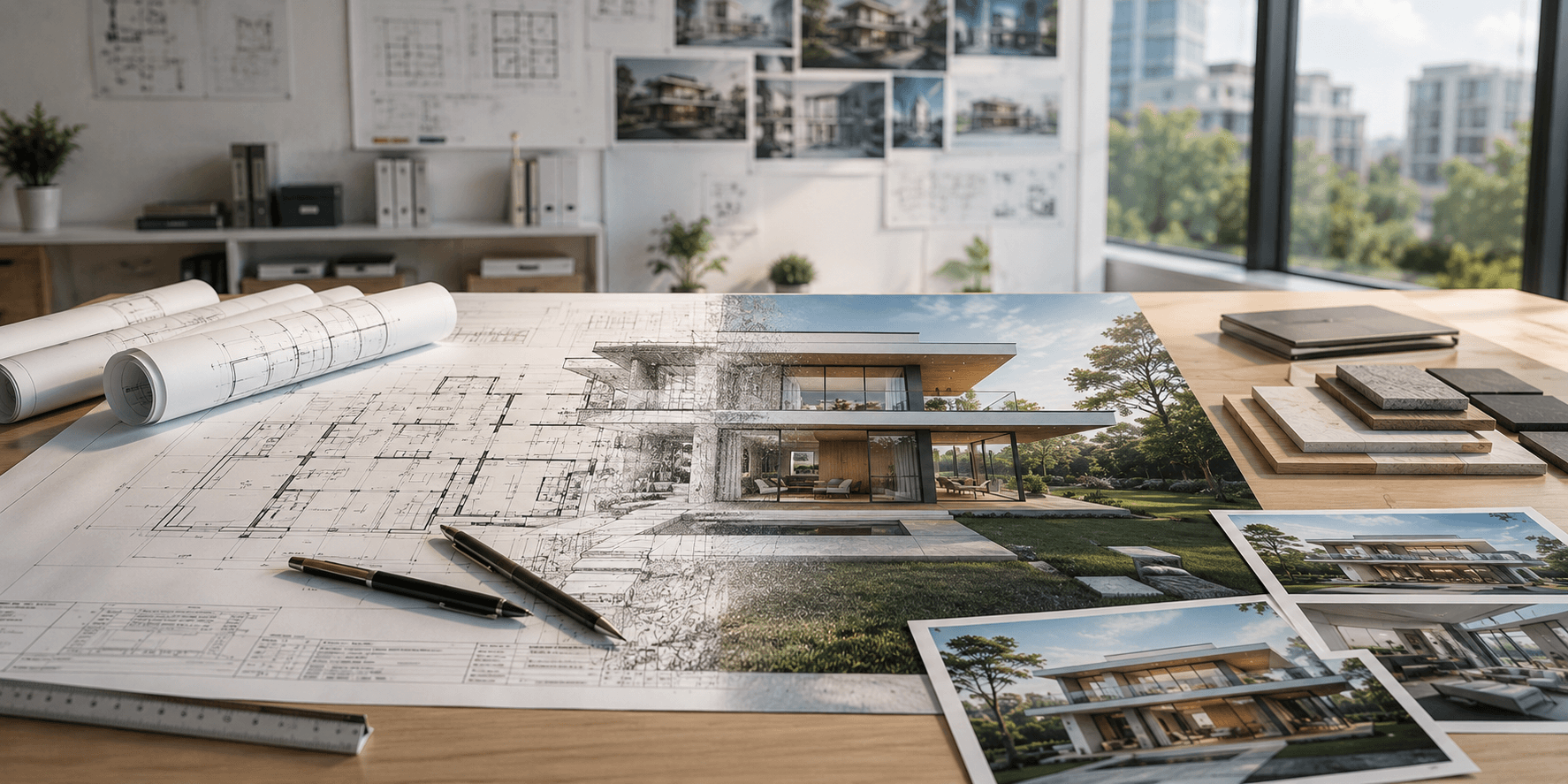
Architectural drawings and 3D renderings solve different problems.
Drawings are essential for design development, technical coordination, permits, and construction. Architects, engineers, and contractors rely on them because drawings explain dimensions, structure, systems, details, and buildability.
But most clients, buyers, investors, and non-technical stakeholders do not read architectural drawings fluently. They may understand that a project is well planned, but they often struggle to imagine how the finished space will look and feel.
That is where 3D rendering services add value.
A floor plan can show room layout. A section can show height. An elevation can show facade logic. But a rendering can show materials, light, scale, context, atmosphere, and the real visual experience of the project.
This does not mean architectural drawings and architectural rendering services compete with each other. They do not.
Drawings are needed to build the project.
Renderings are needed to communicate it.
For architects, developers, real estate teams, and interior designers, the strongest results usually come from using both. Drawings keep the project technically clear. Renderings help people understand, approve, fund, market, and buy into the project before it exists.
Why Architectural Drawings Are Often Misunderstood
Architectural drawings are precise. But they are not always easy to understand.
For architects, floor plans, elevations, sections, and construction drawings are normal working tools. They show relationships, dimensions, structure, openings, materials, and technical intent. An experienced professional can read them and mentally build the project in three dimensions.
Most clients cannot do that.
A client may look at a floor plan and understand where the kitchen, living room, or bedroom is located. But that does not mean they can feel the size of the space, understand ceiling height, imagine daylight, or picture how materials will work together.
This gap creates problems.
A client may approve a drawing without fully understanding the final result. Later, when the design becomes more visible, they may realize that the space feels different from what they expected. That can lead to late changes, extra revisions, delays, and frustration on both sides.
Investors often face the same issue. They may understand the business case, location, square footage, and financial model. But traditional architectural drawings do not always help them see the emotional and commercial value of the project. A drawing can show a building. It does not always show why the building will attract buyers, tenants, or guests.
For real estate buyers, the problem is even clearer. Most buyers do not make decisions from construction drawings. They need to understand the living experience. They want to see how a room feels, how natural light enters the space, how the kitchen connects to the living area, how the balcony relates to the view, or how the building fits into its environment.
Traditional drawings are also limited in marketing. They can support technical explanation, but they rarely create a strong first impression. A floor plan may be useful after someone is interested. It usually does not create interest by itself.
That is why relying only on drawings can slow communication.
The architect may have to explain the same design decisions many times. The developer may struggle to present the project to non-technical investors. The sales team may lack strong visual assets for pre-sales or leasing. The interior designer may receive feedback based on misunderstanding rather than real design concerns.
None of this means architectural drawings are weak. They are not. They are necessary and highly valuable.
The issue is audience fit.
Construction drawings are made for professionals who know how to interpret them. Most clients, buyers, and investors need a different type of communication.
They need to see the project in a way that feels closer to reality.
That is the communication gap that 3D rendering services solve.
What 3D Rendering Services Add That Drawings Cannot
3D rendering services turn technical project information into visual understanding.
A drawing can show what is planned. A rendering can show how that plan may be experienced.
This is the main reason architectural rendering services are valuable for architects, developers, real estate teams, and interior designers. They help translate professional documentation into images that non-technical audiences can understand quickly.
A good rendering does not replace architectural drawings. It builds on them. The floor plans, elevations, sections, CAD files, Revit models, and material notes provide the foundation. The rendering then adds the visual layer that helps people understand the project’s final appearance and purpose.
Realistic Materials
Materials are difficult to understand from drawings alone.
A note may say stone, wood, glass, concrete, metal, tile, or fabric. But those words do not show how the material will look under real light, how it will interact with surrounding finishes, or whether it will support the intended mood of the space.
3D renderings make materials easier to evaluate.
They show texture, color, reflection, contrast, and proportion. A client can see whether a facade feels too cold, whether wood adds enough warmth, whether glass makes the space feel open, or whether a lobby feels premium enough for the target market.
This matters because materials influence how people judge quality.
For developers, realistic materials can support a stronger sales story. For architects, they can help clients approve design decisions with more confidence. For interior designers, they reduce misunderstandings about finishes and atmosphere.
Natural Lighting
Lighting is one of the hardest things to understand from drawings.
A floor plan can show window placement. An elevation can show openings. But neither fully explains how light will shape the space throughout the day.
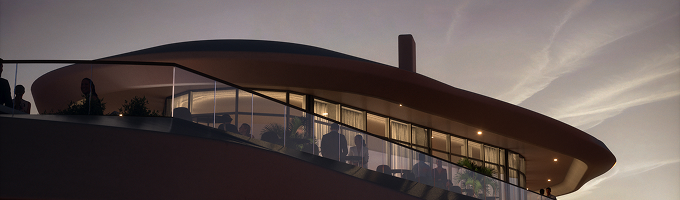
Architectural visualization can show how natural and artificial light affect the project. It can show daylight in a living room, evening lighting on an exterior facade, warm lighting in a restaurant, or balanced light in a commercial lobby.
This is not just an aesthetic detail.
Light changes how people feel about a space. It affects comfort, depth, mood, and perceived value. A space that looks clear and inviting in a rendering can be easier to approve, market, and sell.
For real estate projects, lighting can also help buyers imagine daily use. Morning light in a bedroom, sunset views from a balcony, or soft lighting in an amenity space can communicate more than a technical drawing ever could.
Human Scale
Drawings are accurate, but they can feel abstract.
A room may be correctly dimensioned on a floor plan, but the client may still not understand whether it feels spacious, tight, comfortable, or balanced.
3D renderings help show human scale.
Furniture, people, doors, windows, ceiling height, landscaping, vehicles, and surrounding elements all help viewers understand proportion. This is especially important for residential, commercial, hospitality, and mixed-use projects.
Scale is one of the main reasons buyers and stakeholders need visual support. They are not only asking, “What is the size?” They are asking, “How will this feel in real life?”
Architectural rendering services answer that question more clearly than drawings alone.
Emotional Connection
Drawings explain information. Renderings create connection.
A buyer may not feel much when looking at a plan. But a realistic rendering of a kitchen, living room, rooftop terrace, hotel lobby, or exterior entrance can create a stronger response.
This matters because many decisions are not purely technical.
Buyers need to imagine themselves in the space. Investors need to believe the project can attract demand. Clients need to feel confident that the design reflects their goals. Stakeholders need to see the value, not just the layout.
Good 3D rendering services help create that connection without exaggerating the project. The goal is not to manipulate the viewer. The goal is to make the future space easier to understand emotionally and visually.
Real-World Context
Architectural drawings often isolate the project.
They show the building, room, or technical detail, but not always the full environment. Renderings can place the project into context.
An exterior rendering can show neighboring buildings, streets, landscaping, sidewalks, parking, views, and site conditions. An interior rendering can show furniture, materials, lighting, movement, and lifestyle. An aerial rendering can show how a development fits into a larger area.
Context helps people understand the project’s role.
For developers, this is critical. Investors and buyers want to know how the project fits its market, location, and audience. For architects, context helps explain design logic. For real estate teams, context helps make marketing materials more persuasive and easier to understand.
This is where architectural visualization becomes more than a visual upgrade.
It becomes a communication tool.
Drawings tell professionals how a project is planned.
Renderings help everyone else understand why the project works.
3D Renderings vs Architectural Drawings: Side-by-Side Comparison
Architectural drawings and 3D renderings both matter, but they are built for different audiences.
Drawings are technical. They help architects, engineers, contractors, consultants, and permitting teams understand how the project is designed and how it should be built. They are precise, structured, and necessary.
3D renderings are visual. They help clients, investors, buyers, tenants, and stakeholders understand what the project will look and feel like when complete. They translate technical information into a form that is easier to read.
This difference is important.
A drawing can be correct and still fail to communicate the project to a non-technical audience. A rendering can make the same project easier to understand in seconds.
| Architectural Drawings | 3D Renderings |
|---|---|
| Technical documentation | Visual communication |
| Requires interpretation | Easier to understand |
| Built for architects, engineers, and contractors | Useful for clients, buyers, investors, and stakeholders |
| Construction-focused | Communication-focused |
| Shows dimensions, plans, sections, and details | Shows materials, light, scale, mood, and context |
| Limited emotional impact | Stronger emotional connection |
| Useful for building and coordination | Useful for approvals, marketing, sales, and presentations |
The key difference is not accuracy versus beauty. That is too simple.
Architectural drawings are accurate in a technical way. They show what needs to be built. They define relationships, dimensions, assemblies, and construction logic.
Architectural rendering is accurate in a visual way. It shows how the project may be experienced. It helps people understand space, material quality, lighting, views, and atmosphere.
For an architect, a floor plan may clearly explain the layout. For a buyer, that same floor plan may feel abstract. They may not understand whether the living room feels open, whether the bedroom feels comfortable, or whether the kitchen connects well to the rest of the space.
A 3D rendering solves that problem by showing the space in a way that feels closer to real life.
The same applies to exterior architecture. An elevation can show facade organization and proportions. But a rendering can show how the building sits on the street, how glass reflects the environment, how landscaping softens the structure, and how the project feels from a human point of view.
This is especially important in real estate and development. Most commercial decisions are made by people who are not reading construction drawings every day. Investors, buyers, brokers, planning boards, and leasing teams need a fast visual understanding of the project.
Drawings support the technical side of the project.
Renderings support the communication side.
The strongest projects use both because each format answers a different question.
Architectural drawings answer:
How is this designed and built?
3D renderings answer:
What will this project look and feel like?
When both are used correctly, the project becomes easier to develop, explain, approve, market, and sell.
When Drawings Are Enough—and When They Are Not
Architectural drawings are not a problem. They are essential.
The real question is when drawings are enough and when architectural visualization becomes necessary.
In early technical work, drawings often do the job well. Architects and engineers need plans, sections, elevations, schedules, and construction documents to coordinate the project. These materials are the foundation of design development and construction.
But once the audience changes, the communication need changes too.
Internal Design Development
During internal design development, drawings may be enough for the core project team.
Architects, designers, engineers, and consultants can use drawings to test layouts, adjust dimensions, coordinate structure, and review technical decisions. At this stage, the goal is often accuracy and coordination, not emotional presentation.
Still, even during internal work, rendering services can help when the team needs to evaluate massing, light, material direction, or spatial feel. A simple visualization can reveal issues that are harder to notice in plan view.
This is especially useful when design decisions depend on how a space will be experienced, not just how it is arranged.
Planning and Permits
For permits and construction approvals, drawings are usually required.
Planning departments, review boards, and building officials often need technical documents. Renderings cannot replace that. They do not provide the full construction detail needed for formal review.
But architectural visualization can support the approval process.
A planning board may understand the technical submission better when renderings show the building in context. Neighbors or community stakeholders may respond more clearly when they can see the facade, street relationship, landscaping, height, and visual impact.
In these cases, renderings do not replace drawings. They make the drawings easier to understand.
Marketing and Sales
Drawings are rarely enough for marketing and sales.
A buyer may look at a floor plan, but that usually happens after interest already exists. The first impression often comes from images. People want to see the space, not decode it.
This is where 3D rendering services become important.
A strong rendering can show the finished project before construction is complete. It can communicate materials, lighting, views, amenities, lifestyle, and atmosphere. These elements are difficult to sell through drawings alone.
For real estate teams, this matters because marketing needs attention fast. A campaign, listing, brochure, landing page, or ad has only a short moment to make the project feel credible and desirable.
A technical drawing does not usually do that.
A high-quality rendering can.
Investor Presentations
Investor presentations need clarity.
Investors may review financial models, market data, development timelines, and risk. But they also need to understand what is being built. A strong visual package helps make the project more tangible.
Architectural drawings can support due diligence, but they usually do not communicate market appeal. Renderings help show how the project will look, who it may attract, and how it may fit into the market.
This does not mean investors make decisions based only on renderings. They do not.
But good architectural visualization can make the opportunity easier to understand. It can support the story behind the numbers.
Pre-Sales Campaigns
Pre-sales campaigns depend heavily on visual confidence.
Buyers are often asked to make decisions before the property is finished. They may not be able to walk through the space. They may not see the final materials. They may not understand the layout from drawings alone.
3D renderings help reduce that uncertainty.
They show the buyer what the future space may feel like. They help explain interiors, exterior design, amenities, views, and lifestyle. For developers, this can make early marketing more effective and give sales teams stronger materials.
In short, drawings are enough when the audience is technical and the goal is coordination.
Renderings become necessary when the audience needs to understand, approve, fund, market, lease, or buy the project.
How 3D Rendering Services Improve Project Approvals
Project approvals often slow down when people do not understand what they are approving.
This can happen with clients, investors, planning boards, internal teams, community stakeholders, or ownership groups. The drawings may be accurate, but the audience may still struggle to picture the final result.
3D rendering services help reduce that gap.
A clear architectural rendering makes the project easier to evaluate. It shows the design in a format that more people can understand. Instead of asking stakeholders to imagine materials, scale, lighting, and context from technical drawings, the rendering gives them a visual reference.
This can lead to faster decisions.
Clients often approve design directions more confidently when they can see the project in realistic form. They may better understand how materials work together, how a space feels, or how the building relates to its surroundings. That reduces uncertainty and makes feedback more specific.
Stakeholder alignment also improves.
On many projects, different groups care about different things. Architects may focus on design accuracy. Developers may focus on market appeal. Investors may focus on project value. Marketing teams may focus on buyer response. Without a shared visual reference, each group may imagine a different version of the project.
Architectural visualization gives everyone the same visual starting point.
This does not eliminate disagreements, but it makes them easier to discuss. Instead of abstract comments, the team can respond to something visible. Camera angles, materials, lighting, landscaping, facade treatment, and spatial relationships become easier to review.
Renderings also reduce the number of unnecessary revisions.
Many late-stage changes happen because the client did not fully understand the design earlier. A floor plan may have been approved, but the final experience was not clear. When realistic visuals are introduced earlier, misunderstandings can be caught before they become expensive.
For example, a client may realize that a lobby feels too formal, a facade material looks too heavy, or an amenity space needs a warmer atmosphere. These are much easier to adjust during visualization than after construction documents are finalized or marketing materials are already in production.
This is why architectural rendering services are often valuable before the final stage. They help teams test communication, not just appearance.
For Fortes Vision, this is one of the main goals of visualization work. The rendering should not only look professional. It should help people make better decisions with less confusion.
When a project is easier to understand, approvals move with more confidence.
And when approvals move with more confidence, teams can reduce delays, avoid repeated explanations, and keep the project closer to its intended direction.
Why Real Estate Developers Invest in Rendering Before Construction
Real estate developers often need to sell the project before the project exists.
That is the core reason 3D rendering services matter so much in development. Drawings may be enough for technical coordination, but they are rarely enough for buyers, tenants, investors, brokers, or marketing teams.
Before construction starts, the project is still abstract for most people. There may be a site, a location, a concept, a floor plan, and a financial model. But the finished building is not visible yet. The audience has to imagine it.
That creates risk.
Investors want to understand what they are funding. Buyers want to feel confident about what they may purchase. Tenants want to see the quality of the space. Brokers need visuals that make the offer easier to explain. Marketing teams need assets that can create attention before there is a finished property to photograph.
This is where real estate rendering services become practical, not decorative.
A strong rendering turns an unbuilt project into something people can evaluate. It shows the building, the atmosphere, the materials, the views, the amenities, and the surrounding context. It helps people understand the project faster and with less explanation.
Investor confidence is one of the biggest benefits.
Financial models matter. Market studies matter. Location matters. But investors also need to see the product. Architectural visualization helps connect the numbers to a real asset. A clear visual package can make a development feel more concrete, more organized, and easier to discuss.
This does not mean renderings replace financial due diligence. They do not. But they support the story behind the investment. They help explain what the project will become and why it may attract demand.
Pre-sales are another reason developers invest in rendering early.
In many residential and mixed-use projects, marketing starts before construction is complete. Buyers may be asked to make decisions based on plans, pricing, location, and visuals. If the visuals are weak, the buyer has more uncertainty. If the visuals are strong, the project becomes easier to understand.
A floor plan may show a unit layout. A rendering can show the living experience. It can show the kitchen, natural light, balcony, finishes, views, and mood. That makes the sales conversation more concrete.
Leasing works the same way.
Commercial tenants and multifamily renters often need to understand a space before it is finished. Renderings can help show lobbies, office interiors, amenity areas, retail frontage, shared spaces, rooftop terraces, fitness rooms, and outdoor areas. These visuals give leasing teams a stronger tool when the physical space is not ready.
Marketing is another major factor.
A development campaign needs images. Websites, ads, brochures, pitch decks, email campaigns, signage, and social content all depend on strong visuals. Traditional architectural drawings do not usually create enough interest for these channels. They explain the project technically, but they do not make it feel real.
Architectural visualization gives the marketing team assets that can be used across the entire campaign.
The value is not only visual appeal. It is consistency. When exterior renderings, interior renderings, amenity visuals, aerial views, and floor plans all follow one visual direction, the project feels more professional and more credible.
That matters in the U.S. real estate market, where buyers and investors compare many projects quickly. The first impression often happens before a call, tour, or meeting. A strong rendering can make the project worth a closer look.
For developers, 3D rendering services help reduce one of the biggest problems in pre-construction marketing: uncertainty.
People cannot visit the finished property yet. But they can understand it better when the visual communication is clear.
The Hidden Cost of Relying Only on Drawings
Relying only on architectural drawings can seem efficient.
The drawings already exist. The project team understands them. They are required for design, coordination, permits, and construction. So it may feel reasonable to use them for client communication, investor discussions, and early marketing as well.
But that approach can create hidden costs.
The first cost is misunderstanding.
A client may approve a floor plan without fully understanding the space. An investor may review drawings without seeing the project’s market appeal. A buyer may look at a plan and still fail to understand how the home, office, or amenity space will feel.
When people do not understand what they are seeing, they make decisions with incomplete confidence.
That often leads to delayed approvals.
Instead of moving forward, teams spend more time explaining the same ideas. Architects walk clients through plans again. Developers clarify the value of the project in meetings. Brokers explain layouts that buyers cannot picture. Designers defend material choices that would be easier to understand visually.
The second cost is revision.
Many additional revisions happen because the original communication was not clear enough. The client may realize late that a space feels different from what they expected. A stakeholder may request changes after seeing more developed visuals. A marketing team may discover that the project does not have enough strong assets for launch.
Late revisions are more expensive than early clarification.
A change made during concept review may be simple. The same change after approvals, documentation, or marketing production may create delays and extra cost.
The third cost is weaker marketing.
Architectural drawings can support technical understanding, but they rarely perform well as primary marketing assets. They are not designed to create emotional interest, show lifestyle, explain atmosphere, or present a property as a finished experience.
For real estate marketing, this matters. Buyers and tenants do not usually respond to construction drawings. They respond to clear visuals that help them imagine the future space.
If the marketing team has only drawings, it may struggle to build strong landing pages, brochures, ads, presentations, or listing materials. The project may appear less developed than it actually is.
The fourth cost is slower stakeholder alignment.
When different people interpret drawings differently, conversations become less efficient. The architect imagines one result. The developer imagines another. The investor focuses on different risks. The client may picture something else entirely.
3D rendering services help align those interpretations.
A realistic visual gives everyone the same reference point. It makes feedback more specific. It reduces abstract discussion. It helps the team identify what needs to change before those changes become more expensive.
This is not about replacing architectural drawings.
It is about using the right communication tool at the right time.
Drawings are essential for the technical life of the project. But when the goal is to help people understand, approve, fund, market, lease, or buy into the project, drawings alone often create too much friction.
The hidden cost is not always visible in the budget line. It appears in extra meetings, slower decisions, repeated explanations, missed marketing opportunities, and avoidable revisions.
That is why rendering services can save time and reduce risk even when they add a separate production cost.
How Fortes Vision Helps Clients Turn Drawings Into Clear Visual Communication
Fortes Vision helps clients move from technical documentation to clear visual communication.
Most projects begin with drawings, models, references, or design documents. These materials are essential, but they are not always easy for non-technical audiences to understand. The role of a rendering company is to translate that information into visuals that explain the project clearly.
The process starts with drawings.
Floor plans, elevations, sections, CAD files, Revit models, SketchUp files, material notes, and site plans help define the project. Fortes Vision reviews these inputs to understand the architecture, spatial logic, proportions, materials, and intended use of the visuals.
This first step matters because a good rendering must be based on correct interpretation.
If the drawings are misunderstood, the final image may look polished but still communicate the project incorrectly. That is why the team studies the source materials before moving into production.
The next step is modeling.
If a clean 3D model already exists, it can be prepared and optimized for visualization. If the project is based on 2D drawings, the model may need to be built from the available documentation. This stage defines the geometry, structure, openings, volume, and key design elements.
Accuracy is important here. Architectural visualization should not distort the project just to make the image look more dramatic. It should support the design and help the audience understand it better.
After modeling, the visual direction is developed.
This includes camera angles, composition, materials, lighting, environment, furniture, landscaping, and mood. Each decision should match the purpose of the image. A visual for investor discussion may need clarity and scale. A sales image may need atmosphere. A planning presentation may need context and accuracy.
Lighting is one of the most important parts of the process.
Good lighting helps explain space. It shows depth, form, material behavior, and atmosphere. Poor lighting can make a good design look flat or confusing. Fortes Vision uses lighting to support the project’s intent, not to hide problems or create artificial drama.
Rendering and post-production come next.
This is where the image is refined into a finished visual asset. Materials are balanced. Reflections are checked. Shadows are adjusted. Color, contrast, atmosphere, and small details are polished. The goal is a realistic architectural rendering that feels clear, credible, and useful.
Quality assurance is built into the process.
Before delivery, the image is reviewed for architectural accuracy, scale, material realism, lighting quality, composition, and alignment with the brief. This step helps reduce errors and ensures the final visual supports the client’s goals.
For architects, this means the design is represented with care.
For developers, it means the project can be shown before construction with more confidence.
For real estate teams, it means marketing materials can explain the future property more clearly.
Fortes Vision’s 3D rendering services are built around this full communication process. The work is not only about producing images. It is about helping people understand what drawings alone often cannot show.
That is where architectural rendering services create real value.
They take technical information and turn it into visual clarity.
Why Strong Projects Need Both Drawings and Renderings
The strongest architectural projects do not choose between drawings and renderings.
They use both because each format solves a different problem.
Architectural drawings are the technical foundation. They define the project for architects, engineers, consultants, contractors, and permitting teams. Without drawings, the project cannot move through design development, coordination, approval, and construction with the necessary precision.
3D rendering services solve the communication problem.
They help non-technical audiences understand what drawings often cannot show clearly: materials, lighting, scale, atmosphere, site context, and the finished experience of the space. That makes them useful for client approvals, investor presentations, real estate marketing, pre-sales, leasing, and stakeholder alignment.
This distinction matters.
A drawing can be technically correct and still hard for a buyer, investor, or client to understand. A rendering can be visually clear, but it still needs accurate drawings behind it to represent the project properly.
That is why the best workflow is not drawings versus renderings. It is drawings first, renderings built from them, and both used for the right audience.
For architects, this means fewer repeated explanations and clearer client conversations. For developers, it means stronger pre-construction marketing and more confident investor discussions. For real estate teams, it means better visual assets before the property is ready to photograph. For interior designers, it means fewer misunderstandings around materials, lighting, and spatial mood.
Fortes Vision works exactly in this space between technical documentation and visual understanding. The team uses architectural drawings, models, material references, and project context as the foundation for clear architectural rendering services. The result is not just a polished image. It is a visual tool that helps people understand the project faster and make decisions with more confidence.
Drawings help teams build the project correctly.
Renderings help people believe in it before it is built.
When both are used together, the project becomes easier to design, approve, fund, market, and sell.
Your Journey | to Marketing Renders | That Bring Out | The Best in Your | Project
Read Our Whitepaper