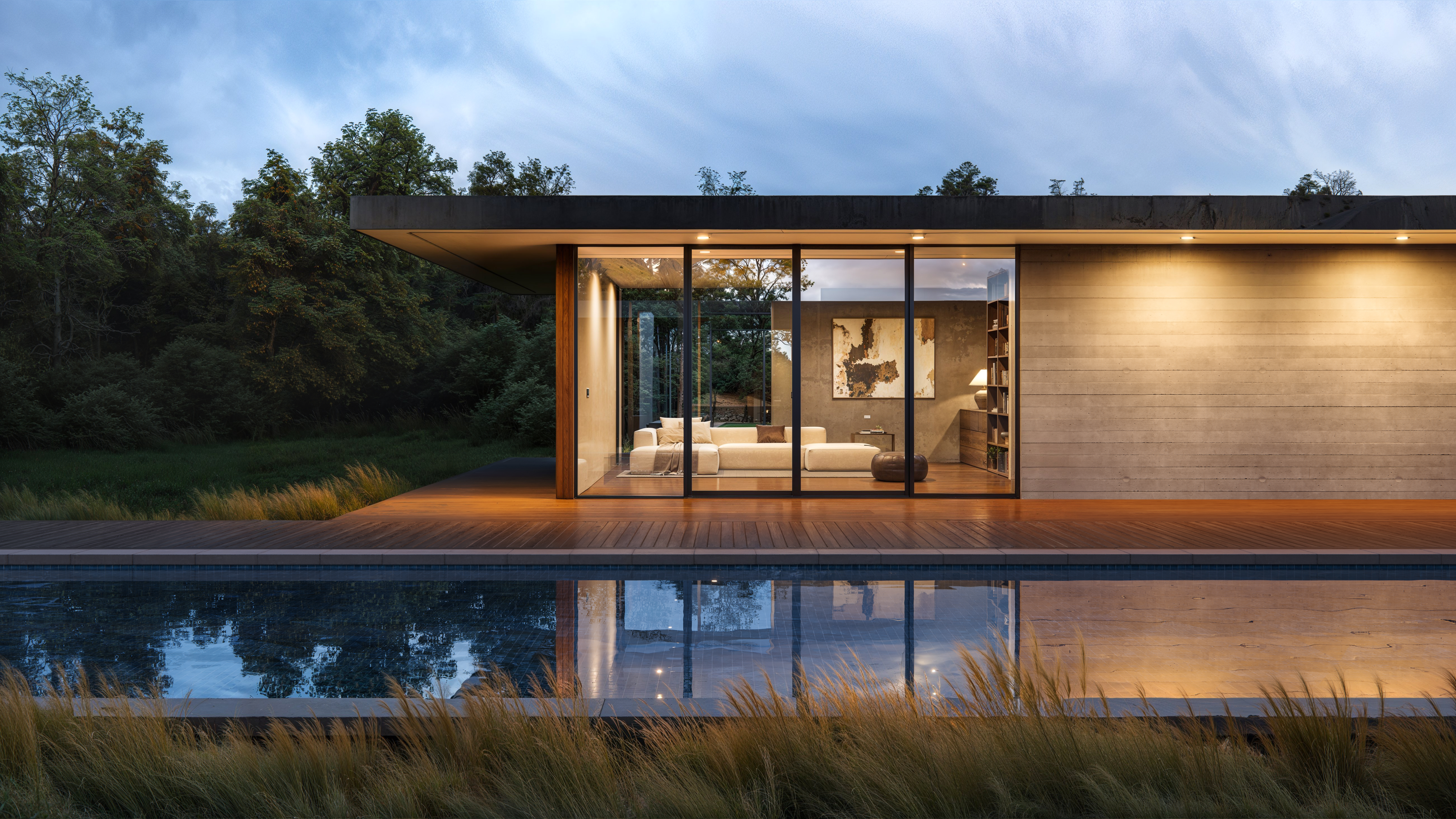
The Real Problem Developers Face Before Construction Starts
Most critical decisions in residential development are made before construction begins.
And that’s exactly where problems start.
At this stage, developers work with floor plans, elevations, and technical drawings. These documents are precise. They are necessary. But they don’t communicate the product the way the market expects today.
Investors don’t “read” drawings.
Buyers don’t visualize space from elevations.
And marketing teams can’t sell something they can’t clearly show.
So decisions are often based on assumptions. How the house will look. How it will feel. How it will sit in its environment. Everyone imagines something slightly different, and no one realizes it until much later.
That’s when the cost shows up.
A facade feels too heavy. Proportions look off. The design doesn’t match buyer expectations. Changes are requested after approvals, after budgets are set, sometimes even after construction starts. Fixing those issues is expensive, slow, and frustrating.
The real issue isn’t the lack of drawings.
It’s the lack of visual certainty.
Developers don’t need “pretty images”. They need confidence that what they’re about to build makes sense visually, commercially, and strategically – before real money is locked in.
What 3D House Rendering Actually Solves for Developers
3D house rendering doesn’t replace architectural documentation. It complements it by solving a different problem.
First, it creates visual clarity early. Before land development, materials procurement, or construction scheduling, developers can see the project as a finished product. Not in abstract terms, but as a realistic, spatial object. That clarity reduces guesswork.
Second, it aligns everyone involved. Architects, engineers, investors, internal teams, and external partners look at the same visual reference. Conversations become concrete. Feedback becomes specific. Misunderstandings drop fast.
Third, it shortens approval cycles. Planning boards, HOAs, and non-technical stakeholders respond better to visuals than to drawings. A clear 3D house rendering often answers questions before they are asked, which leads to fewer revisions and smoother approvals.
This is why developers use 3D House Rendering Services long before construction begins. Not for marketing polish, but for decision-making. A good rendering turns an idea into something that can be evaluated, challenged, and approved with confidence.
If you want to see how this fits into a broader production workflow, this is exactly how professional 3D rendering services are typically used in residential development projects.
Why Architectural Drawings Aren’t Enough Anymore
Architectural drawings are built for professionals. They work well for architects, engineers, and contractors. But development decisions involve more than technical teams.
Most stakeholders interpret drawings differently. Non-technical investors struggle to visualize depth, scale, and material impact. Sales teams can’t translate plans into buyer-friendly narratives. Even experienced developers may overlook how proportions or facade elements will feel in real space.
This is where misunderstandings usually begin.
A floor plan may be correct, but the house feels too narrow once visualized.
An elevation may follow regulations, but the facade lacks market appeal.
A design may look fine on paper, but not competitive next to neighboring projects.
3D house rendering bridges that gap. It translates technical intent into visual reality. It shows how drawings behave in the real world – with lighting, materials, surroundings, and human scale.
From a risk perspective, this matters. Rendering is not about aesthetics. It’s a risk management tool. It helps developers spot issues early, validate decisions, and avoid costly corrections later.
That’s why many residential developers now treat 3D rendering as part of the planning phase, not as an optional add-on. Working with an experienced 3D rendering agency at this stage means fewer surprises when construction actually begins.
How Developers Use 3D House Rendering at Different Project Stages
Developers don’t use 3D house rendering at just one point in a project.
They use it as a working tool across several stages, each with a different goal.
Concept Validation
This is where rendering brings the most value early on.
At the concept stage, drawings are still flexible. Materials can change. Facade logic can be adjusted. Massing decisions are not locked. That’s exactly when visual testing matters most.
A 3D house rendering allows developers to check proportions, facade balance, rooflines, and how the building sits on the lot. It helps answer practical questions early. Does the house feel too bulky from the street? Does the facade read as premium or generic? Do architectural elements work together, or fight each other?
These are hard questions to answer from plans alone. Rendering makes them obvious before they turn into expensive fixes later.
Investor & Partner Presentations
Most investors don’t invest in drawings. They invest in outcomes.
When developers present a project to partners or investors, visuals shape perception fast. A clear 3D house rendering communicates scope, quality, and intent without long explanations. It builds confidence early and reduces back-and-forth.
This matters even more in pre-sale or pre-construction conversations. Strong visuals help stakeholders understand what they are committing to, which speeds up decisions and lowers friction.
At this stage, developers often rely on professional 3D House Rendering Services to ensure the visuals are accurate, consistent, and aligned with the real product, not just visually appealing.
Pre-Marketing & Sales Materials
Marketing often starts before construction does.
Developers need visuals for landing pages, brochures, email campaigns, and listing platforms long before there’s anything to photograph. Renderings become the foundation for these assets.
More importantly, they keep messaging consistent. The same visuals support marketing, sales, and investor communication. That consistency helps avoid mismatched expectations later in the process.
In this sense, rendering is not decoration. It’s infrastructure for communication before a physical product exists.
Reducing Costly Design Changes Before Construction Begins
Design changes are normal. Late design changes are expensive.
One of the biggest advantages of 3D house rendering is how early it exposes problems that drawings don’t make obvious. Issues with facade rhythm, window alignment, material contrast, or scale often look acceptable on paper but feel wrong when visualized.
Rendering helps catch these issues while changes are still cheap. Adjusting a facade in a 3D scene takes hours. Adjusting it on a construction site takes weeks and affects budgets, schedules, and contractors.
This difference matters. A change made on screen doesn’t delay permits. It doesn’t require reordering materials. And it doesn’t ripple through the entire build timeline.
For developers, this is about risk control. Rendering reduces the chance of committing to decisions that only reveal their flaws once construction is underway.
Speed Matters: How Rendering Helps Move Projects Faster
Speed is not just about construction. It’s about decisions.
When visuals are clear, decisions happen faster. Internal teams align quicker. External stakeholders ask fewer questions. Approval processes move with less friction because fewer assumptions are left open.
Rendering also allows marketing to start earlier. Instead of waiting for construction progress, developers can launch pre-marketing campaigns using finalized visuals that accurately represent the project.
This is why experienced developers treat 3D rendering services as part of the project pipeline, not a last-minute asset. Rendering supports planning, approvals, and marketing at the same time. That overlap saves time and keeps momentum strong.
In competitive markets, especially in the U.S., that time advantage matters.
Why Developers Work with a 3D Rendering Agency Instead of Freelancers
Many developers start by considering freelancers. It seems faster. Sometimes cheaper. And for very small tasks, it can work.
But residential development rarely stays small.
A single house project often needs multiple views, revisions, exterior and interior alignment, and consistent quality across all materials. That’s where freelancers usually struggle. Not because they lack skill, but because they work in isolation.
A 3d rendering agency operates differently. It works as a system. Models, lighting setups, materials, and camera logic are shared across the project. That keeps visuals consistent from the first concept image to final marketing renders.
There’s also the workflow factor. Agencies understand how rendering fits into development timelines. They know when visuals are used for approvals, when they support investor decks, and when they move into marketing. That context matters. It affects how scenes are built, how flexible models remain, and how revisions are handled.
For developers, the choice is less about talent and more about reliability. An agency reduces coordination overhead, lowers the risk of visual inconsistency, and supports projects that evolve over time, not just single images.
Common Mistakes Developers Make When Ordering House Rendering
Most problems with rendering don’t come from the visuals themselves. They come from timing and expectations.
One common mistake is ordering rendering too early. When the concept isn’t defined, visuals become guesswork. The result looks polished but doesn’t reflect decisions that haven’t been made yet.
The opposite mistake is ordering too late. Rendering is brought in after approvals or budgets are locked, leaving no room to adjust obvious visual issues without real cost.
Another issue is unclear goals. Developers often request “renderings” without defining how they will be used. A rendering for approvals is not the same as one for sales. Different audiences need different levels of detail, context, and realism.
Finally, many teams underestimate how much input matters. Incomplete references, vague direction, or last-minute changes lead to frustration on both sides. Clear intent upfront saves time later.
Avoiding these mistakes doesn’t require more visuals. It requires using rendering deliberately, as part of the planning process, not as a reaction to a problem.
When 3D House Rendering Is a Must-Have, Not a Nice-to-Have
Not every project needs rendering at the same level. But there are cases where skipping it creates real risk.
Residential developments with competitive pricing depend on perception. Buyers compare visually before they compare specs. If your project doesn’t clearly stand out, it loses attention early.
Multi-unit housing raises the stakes further. Repetition amplifies design flaws. What looks minor on paper becomes obvious when repeated across multiple units. Rendering helps spot those issues before they scale.
Pre-sale driven projects rely on trust. Buyers commit before anything exists. Clear, accurate visuals reduce uncertainty and support sales conversations without overpromising.
In these scenarios, 3D house rendering isn’t an enhancement. It’s a safeguard. It helps developers make better decisions early, communicate clearly with stakeholders, and enter the market with fewer unknowns.
When construction starts, it’s already too late to fix visual mistakes cheaply. That’s why experienced developers choose to see the project clearly first.
Why 3D House Rendering Before Construction Leads to Better Decisions and Fewer Risks
By the time construction starts, most decisions are already locked. Budgets are approved. Timelines are set. Changing things at that point is slow and expensive.
That’s why experienced developers choose to see the project clearly before anything is built.
3D house rendering helps make better decisions early. It reduces assumptions. It aligns teams. It shows what drawings can’t. Developers know what they are approving, what they are selling, and what they are building.
It also reduces surprises. Visual issues are caught before they turn into real problems. Stakeholders stay aligned. Marketing starts with a clear product story instead of guesswork.
And finally, it strengthens market entry. When a project goes public, it looks intentional. Confident. Competitive. Buyers, investors, and partners see the same thing the developer planned from the start.
Rendering before construction isn’t about visuals for the sake of visuals. It’s about control. Fewer unknowns. And smoother execution from concept to completion.
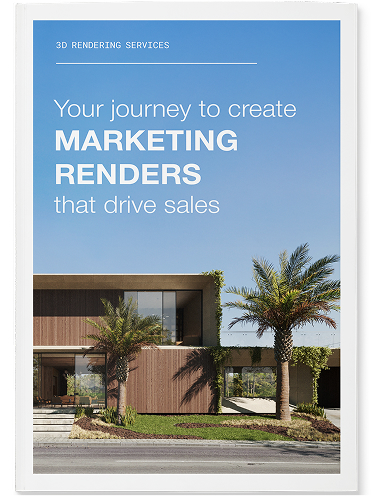
Your Journey | to Marketing Renders | That Bring Out | The Best in Your | Project
Read Our Whitepaper